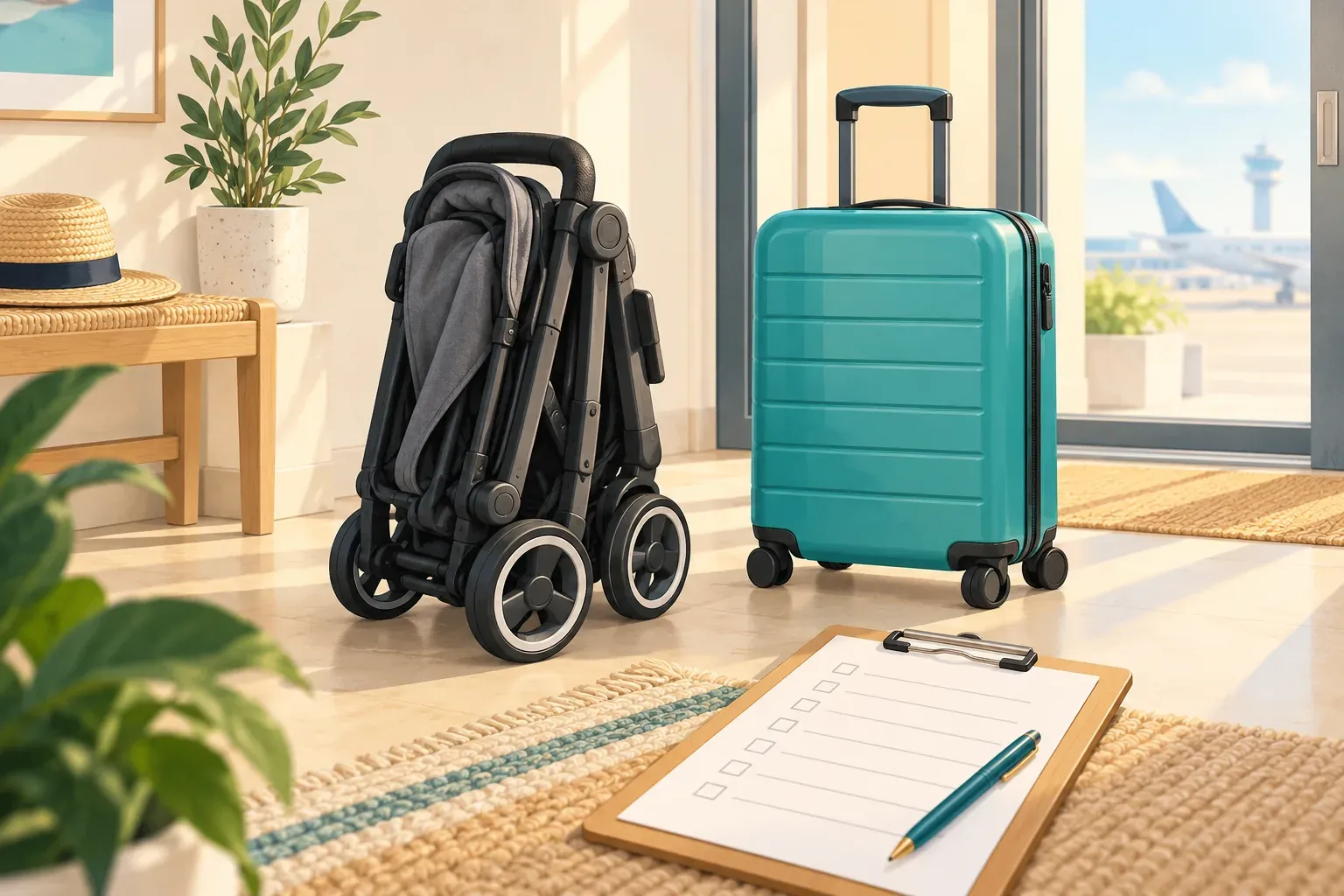
Before deciding which baby gear to pack, write down what must work at each stage of the journey. A stroller that is useful outside your home still needs a plan for the airport or car. Equipment supplied at a hotel or relative’s house still needs identification and instructions.
This checklist connects those decisions so you can find missing arrangements before departure. It has no shopping picks or affiliate offers. It focuses on gear logistics and official US equipment guidance, not health advice, feeding plans or a guarantee that a carrier will accept a particular item.
Map the journey before choosing the bag
List the actual stages: leaving home, reaching the departure point, travelling, transferring at the destination, and staying overnight. Cross out stages that do not apply. Then assign a job to each item you are considering taking.
| Stage | Equipment question | Who or what can confirm it? |
|---|---|---|
| Getting to the airport or starting a drive | Which vehicle and child-restraint setup will you use? | Vehicle and restraint instructions; installation help if needed |
| Airport and flight | What will happen to the stroller, and what restraint arrangements are agreed? | Operating airline and the equipment documentation |
| Arrival transfer | Is a suitable seat and installation plan already arranged? | Transport provider and matching instructions |
| Overnight stay | What exact sleep equipment will be available? | Host or accommodation provider; model documentation |
Keep the answer beside the question. “We will sort it out when we arrive” should remain an unresolved task, especially when the answer determines what you bring.
For a flight, confirm the restraint arrangement separately
The FAA’s child-safety guidance recommends an approved child restraint appropriate to the child’s weight and suggests buying a ticket so it can be used. It identifies the certification label for use in both motor vehicles and aircraft, and tells families to check suitability with the airline and follow the manufacturer’s instructions.
Read that guidance before deciding on equipment, then give the operating airline the exact model and your flight details. Ask how the child will be seated and what information it needs to confirm the arrangement. A general “travel friendly” description is not the same as a confirmed arrangement for your flight.
This checklist does not approve a seat for an aircraft or supply installation instructions. Keep the model manual accessible and resolve uncertainty with the manufacturer and airline before travel.
Ask about the stroller instead of assuming a baggage rule
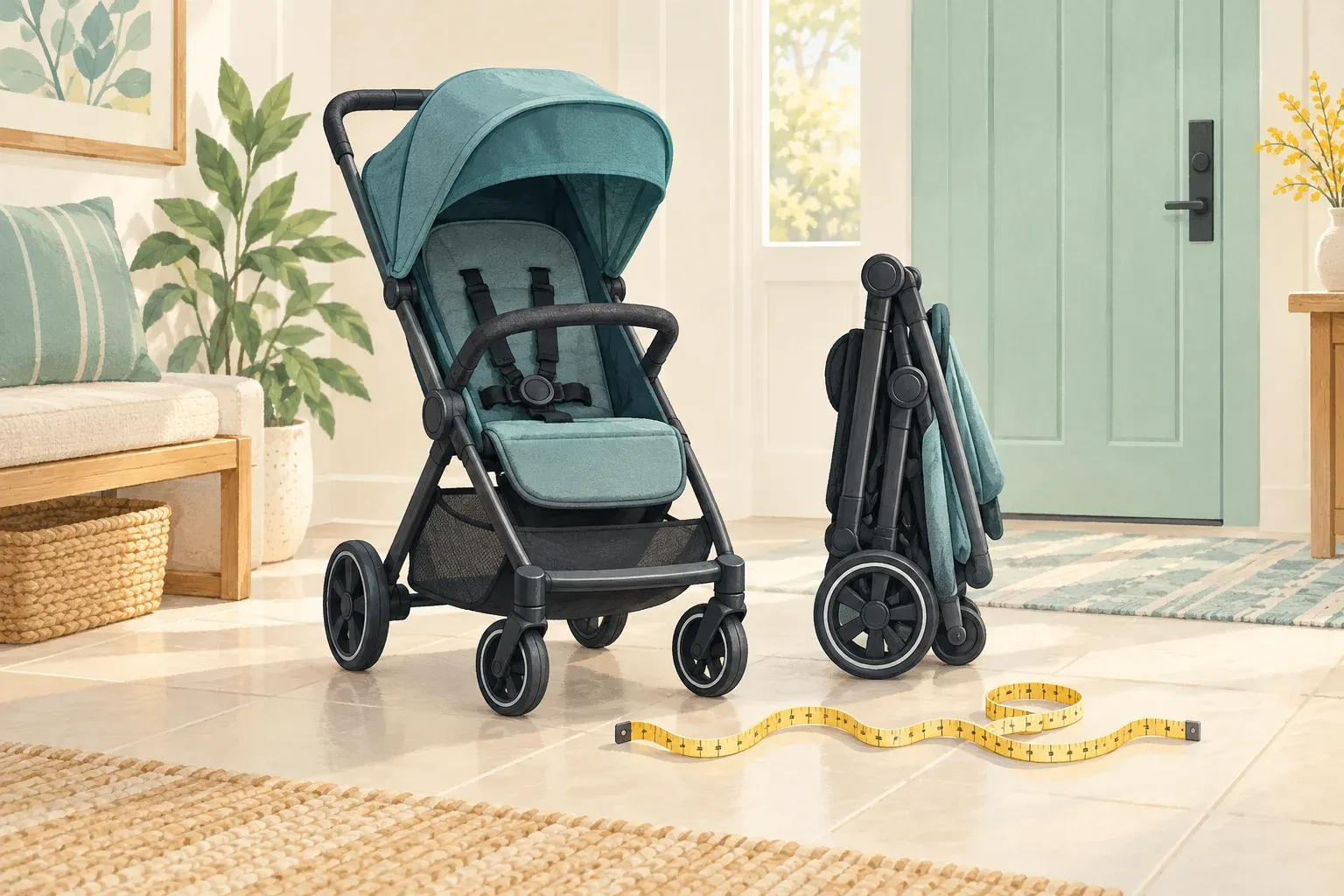
Do not choose a stroller for a trip solely because a seller calls it cabin-sized. Record its folded measurements, weight and any separate pieces, using the manufacturer’s documentation for the exact configuration you have.
Ask your operating airline these questions:
- Is this exact item accepted in the cabin, checked at the gate or checked elsewhere?
- What size, weight and item-count conditions apply to our booking?
- If it is checked, where will we collect it after each flight?
- What changes if we connect to a flight operated by another airline?
These are questions to confirm, not claims about an airline’s current allowances. Save the airline’s reply with the booking details and recheck after a change to the itinerary. For the everyday size and carrying trade-offs, see our stroller selection guide.
Resolve vehicle fit at both ends of the journey
NHTSA advises choosing a restraint for the child’s age and size that fits the vehicle, and following both its instructions and the vehicle manual. A plan that only covers the flight leaves the arrival transfer unanswered.
Write down the car or transport service you expect to use at each end. If equipment is supplied, ask for the exact model and the arrangements for installing and using it. If those details are unknown, keep working on the transport plan before deciding that your luggage list is finished.
For installation help in the US, NHTSA’s car-seat page links to certified inspection services. This guide does not assess a rental vehicle, clear a borrowed seat or interpret another country’s restraint rules. Check the destination’s requirements with the relevant authority.
Verify overnight equipment before leaving it off your list
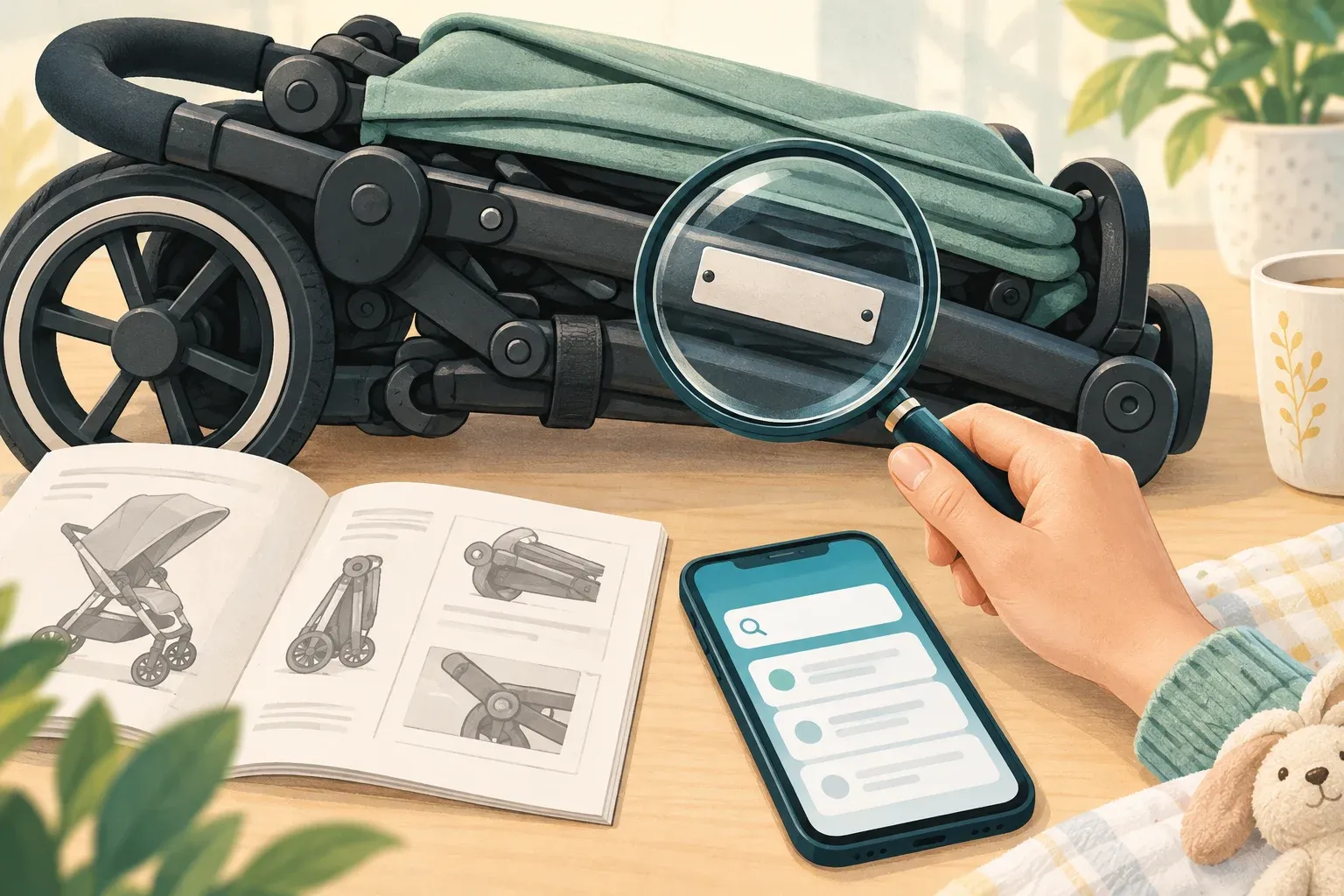
Ask your host what exact crib, bassinet or play yard will be provided, whether its instructions are available, and whether they can share its model label details. Use those details to check official recall records.
The CPSC directs families to use sleep products that meet federal requirements and to keep the sleep space clear apart from a fitted sheet. Do not treat an accommodation description such as “baby bed available” as verification of a particular item. Our safe-sleep guide links to the fuller official guidance.
If the answer is incomplete, discuss an appropriate alternative with the host before departure. A compact fold or a carrying bag does not establish that equipment is suitable for sleep. Do not improvise mattresses or assembly; follow the exact manufacturer’s instructions.
Pack around access and transfers
Once the equipment decisions are confirmed, sketch how you will move it. This is a logistics exercise: which adult handles each bag, which item must be folded, and which documents should remain accessible?
Put these details in a short handover note:
- Restraint model, manual location and agreed travel arrangements.
- Stroller handover and collection plan for each flight, if applicable.
- Transport contact and equipment arrangements at the destination.
- Overnight equipment details and any unresolved questions.
- What to revisit if the airline, vehicle or accommodation changes.
Avoid making a luggage experiment part of a journey with a child. You can practise your packing layout and folding sequence ahead of time using the equipment instructions. Do not add carrying accessories or alter equipment unless its manufacturer permits them.
Finish with a confirmation list
| Decision | Confirmed detail | Still needs an answer? |
|---|---|---|
| Outbound and arrival transport | Your notes | Your notes |
| Flight restraint arrangement | Your notes, if applicable | Your notes |
| Stroller handling | Your notes, if applicable | Your notes |
| Sleep equipment at the destination | Your notes | Your notes |
| Manuals and model details | Where they are saved | Your notes |
Revisit the unresolved column after any booking change. The useful result is a plan that explains where each item goes and what is already arranged, rather than the largest possible packing list.
How we prepared this checklist
This is a research-based guide by the Fresh Baby Gear Team using official FAA, NHTSA and CPSC sources reviewed on October 14, 2026. We have not tested gear, inspected destination equipment or verified an individual itinerary. The journey map and confirmation worksheet are our original planning tools. Airline permissions and local requirements must be checked for your actual trip. The cover illustrates generic strollers rather than specific products.