A baby registry lists things you could buy. A useful gear plan records the jobs you need those things to do: travelling home, setting up a sleep space, storing everyday supplies and sharing equipment with another caregiver.
Start with those jobs before choosing brands or accepting a bundle. This checklist helps expecting parents turn an open-ended shopping list into a few decisions they can actually complete. It covers equipment planning, not pregnancy symptoms, treatment, feeding decisions or a universal list of everything a baby needs. There are no specific product recommendations or affiliate offers.
Write down your constraints before your shopping list
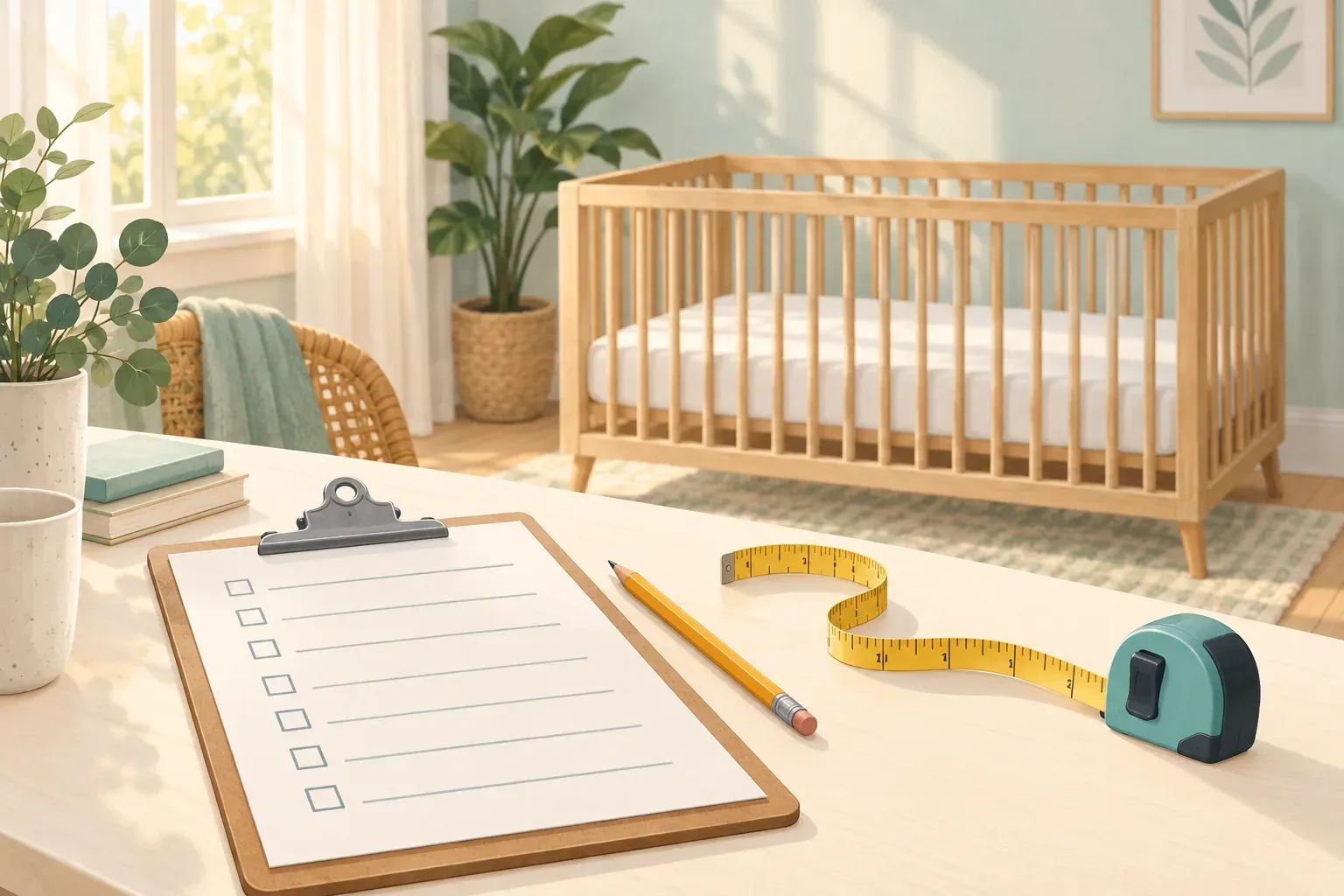
Take a sheet of paper and record the limits that could change your choices:
- Space: where equipment will be used and stored, including doors and the route into your home.
- Transport: the vehicle or other transport you expect to use, and who will handle the equipment.
- Help: which caregivers will use the same items and where they will find the instructions.
- Money: an overall spending limit and an amount you want to keep uncommitted.
- Timing: which decisions depend on another decision, delivery or setup appointment.
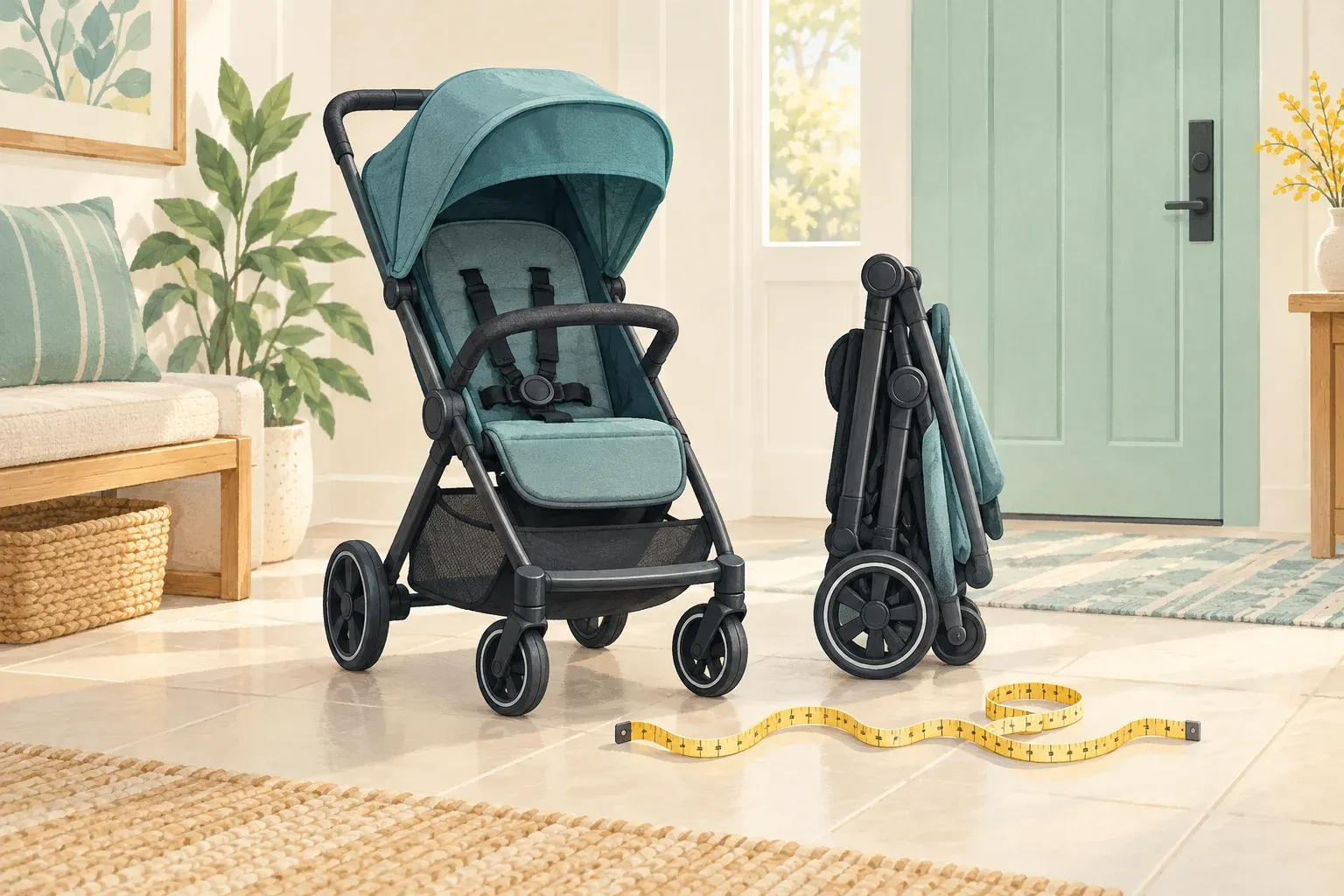
For example, if a stroller will need to live in an upstairs cupboard, record the cupboard and stair route before comparing baskets or accessories. If two people will use the equipment, make space for both sets of practical requirements. These are planning prompts, not a claim that one arrangement works for every household.
Our stroller buying checklist helps turn those measurements and carrying requirements into a shortlist.
Separate choosing a sleep space from decorating it
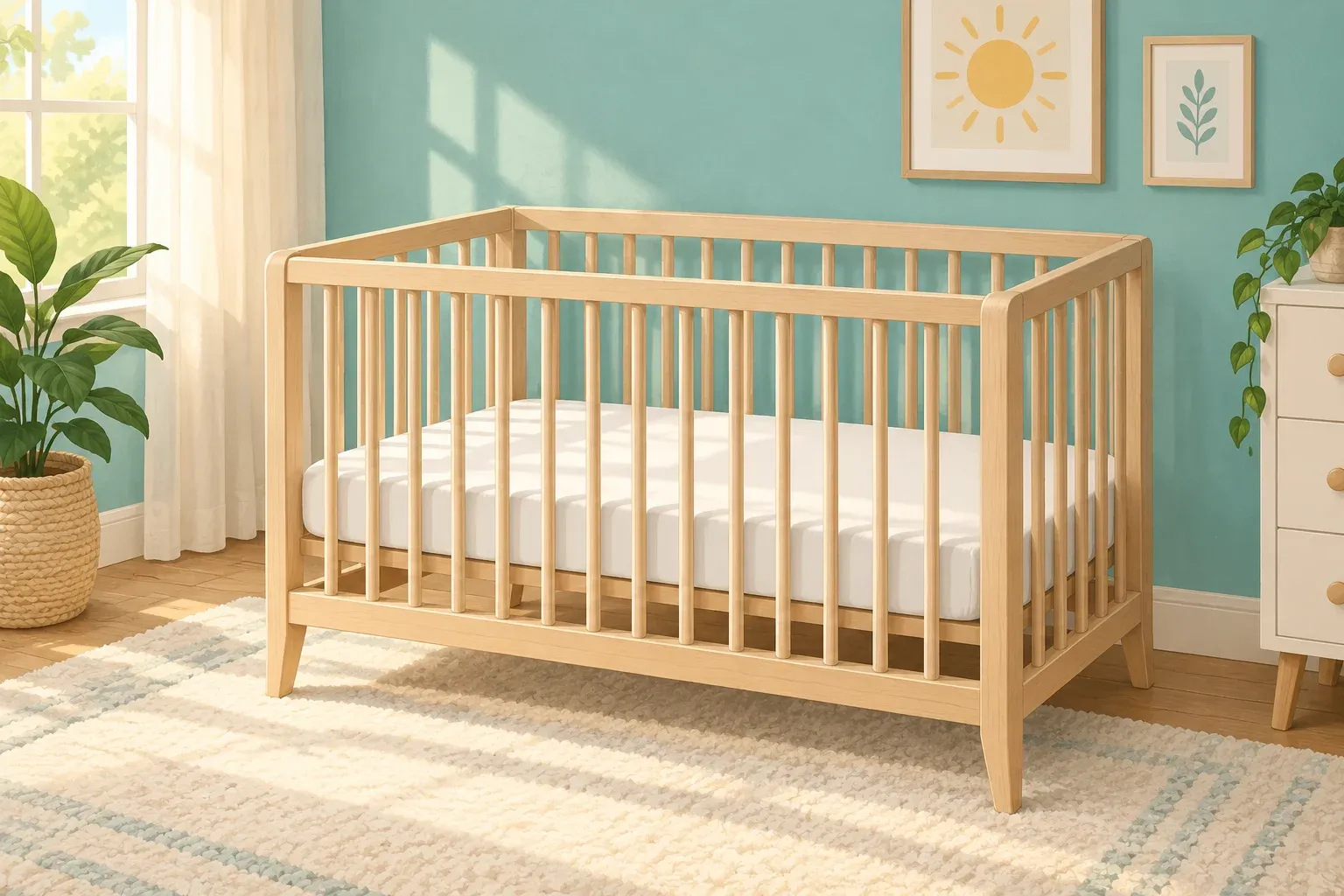
Decide where the sleep space will go, then investigate equipment intended for that purpose. The CPSC’s current sleep-space guidance identifies cribs, bassinets, play yards and bedside sleepers that meet federal requirements, and calls for a fitted sheet without added pillows or blankets.
Treat decorative purchases as a separate list so they do not determine the equipment choice. A coordinated nursery bundle does not answer whether each item is appropriate for its intended use. Our safe-sleep guide explains the official guidance in more detail.
In your plan, record the exact model, matching instructions, proposed location and any questions that still need an answer. This checklist does not verify a particular product or your room.
Plan the first vehicle journey as its own task
If your baby will travel by car, make choosing and setting up a car seat a distinct decision. NHTSA says to select a seat for the child’s age and size, check vehicle fit, and follow both the seat instructions and the vehicle manual. Its guidance includes rear-facing travel for infants and help from certified inspection technicians.
Record which vehicle you are planning for, where its manual is, and who will arrange any installation help. A matching stroller attachment or a convenient carrying handle does not complete this separate check.
If you will use another person’s vehicle, agree who is resolving the seat choice and setup. Leave unanswered details visible on the list rather than marking the task complete because a box has arrived.
Give every possible purchase a buy, borrow or wait decision
Use three labels without treating any one label as automatically safer or cheaper:
| Decision | Question to answer before committing |
|---|---|
| Buy | What job will this item do, and what must fit your home or transport? |
| Borrow or receive | Can you establish the exact model, obtain its instructions and resolve its condition and recall questions? |
| Wait | What information or change would make this item worth reconsidering? |
Borrowing is a procurement option, not a safety clearance. An item offered for free still needs assessment. If you cannot identify it or establish what parts and instructions belong with it, leave it undecided and contact the manufacturer. For car seats, consult NHTSA’s used-seat resources linked from its car-seat guidance before accepting a second-hand seat.
Waiting also needs a reason. For an optional convenience item, write down the specific problem it would solve rather than keeping it on the list indefinitely. This approach is our editorial budgeting method; it does not promise a particular saving.
Use a small decision worksheet
Give each row an owner and a next action. A row should describe a job, not just a product name.
| Job | Decision | Check before committing |
|---|---|---|
| Sleep space | Buy, borrow or wait | Model, instructions and location |
| Car travel | Buy, borrow or wait | Child fit, vehicle and setup |
| Outings | Buy, borrow or wait | Carrying route and storage |
| Supplies | Buy, borrow or wait | Space and access |
| Optional item | Buy, borrow or wait | The problem it would solve |
Below each row, add the name of the person handling the decision and their next action. For example: “Jamie — measure the storage space before making a shortlist.”
You do not need to fill every row in one sitting. Work on the decisions whose missing information affects something else, then return to the optional items. Keep practical questions distinct from health questions for your maternity or pediatric care team.
Keep the records after the shopping is finished
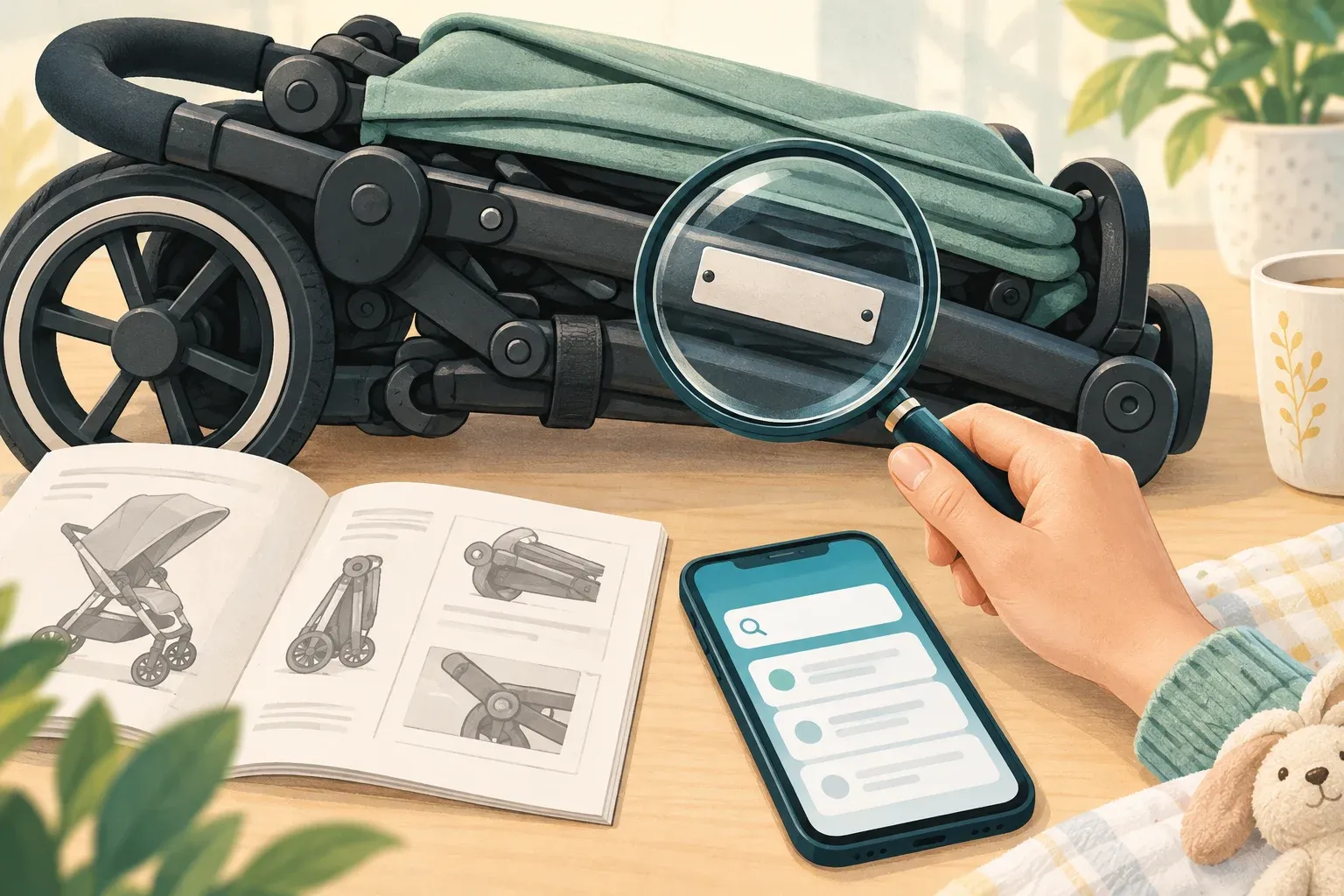
Save the model label details, instructions and purchase record together. Use our recall-checking guide to find the relevant official records; owning an item or not remembering a recall is not a completed check.
The CPSC’s 2021 household product check-up guidance tells consumers to register nursery products using the supplied card or the manufacturer’s website. NHTSA likewise recommends car-seat registration for recall and safety notices. Make registration a named task rather than leaving the card in the packaging.
Before putting an item into use, return to its matching instructions and any unresolved questions. Record where another caregiver can find those instructions. A completed shopping list should leave you with equipment you can identify and understand, not merely a collection of unopened boxes.
How we prepared this checklist
This is a research-based guide by the Fresh Baby Gear Team, based on the official US sources linked above and reviewed on October 14, 2026. We have not tested products or inspected your home, vehicle or borrowed equipment. The worksheet and buy, borrow or wait framework are our original planning tools, not a government-required schedule. The cover is an illustration of a generic empty nursery. Check the authorities and rules relevant to your location if you live outside the United States.