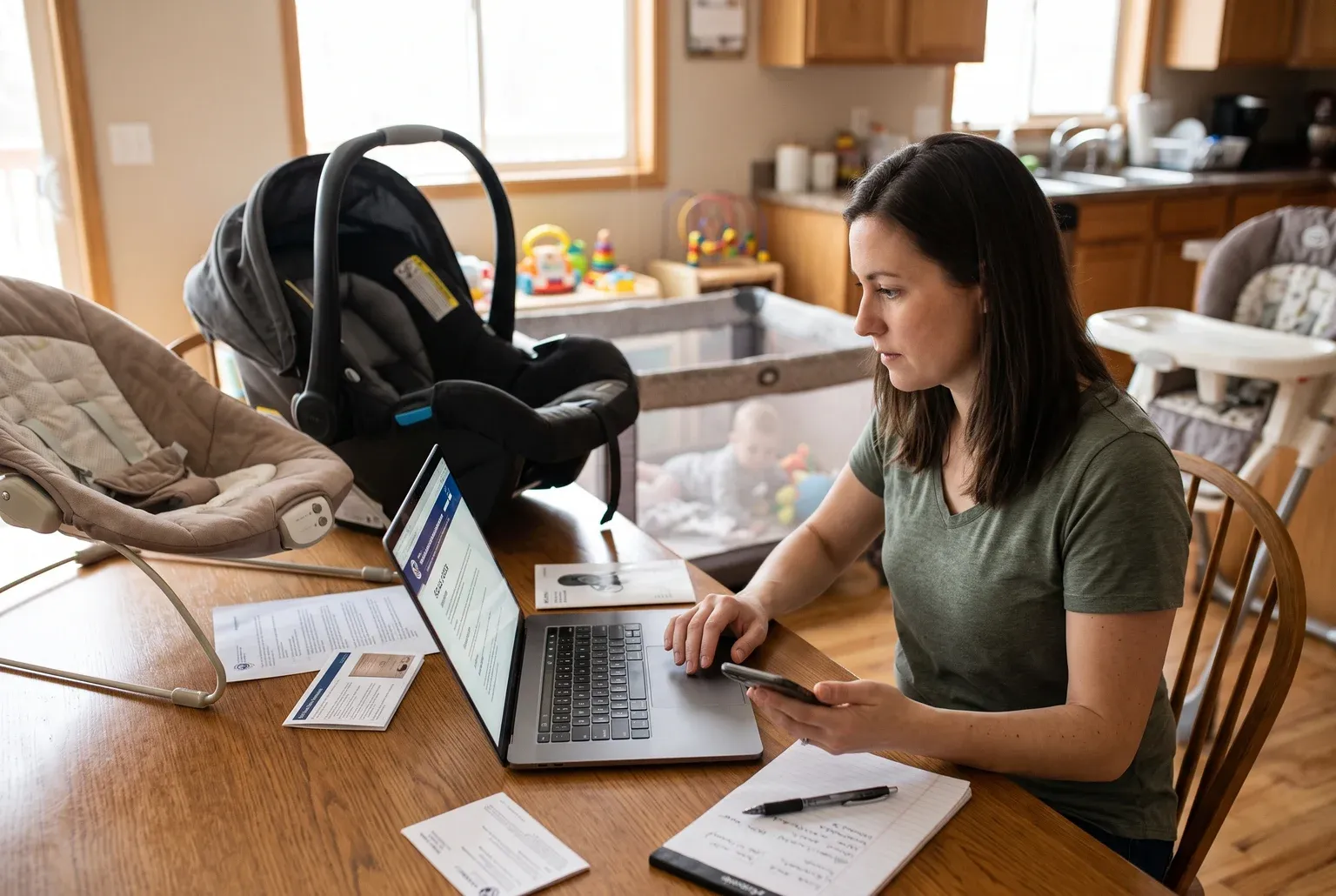
A car seat check appointment is a chance to learn with someone who can look at your actual seat and vehicle. Arrive with the manuals, the questions you could not resolve and enough time to take part. The useful outcome is being able to repeat the relevant steps yourself, with a clear contact for anything still unanswered.
This guide covers preparing for a US appointment. It does not select a seat or provide an installation method for your vehicle. Keep the seat’s own instructions and your vehicle owner’s manual at the centre of the conversation.
Find a check and confirm the details
Start with NHTSA’s car seat inspection information. It directs caregivers to inspection stations, where certified technicians can explain installation and use. NHTSA says checks are free in most cases and some locations offer virtual inspections. Confirm the service, cost and appointment arrangements directly; those are not promises about every provider.
When booking, ask how much time to reserve for the number of seats and vehicles you need help with. Tell the organiser if you are preparing before a baby arrives or cannot bring your child. Ask about language or access requirements before choosing a time.
Do not assume an appointment for one vehicle answers questions about a second car. Our planning suggestion is to name each vehicle and seating arrangement you want to discuss when booking, so the organiser can explain what the session can cover.
Gather the equipment and information
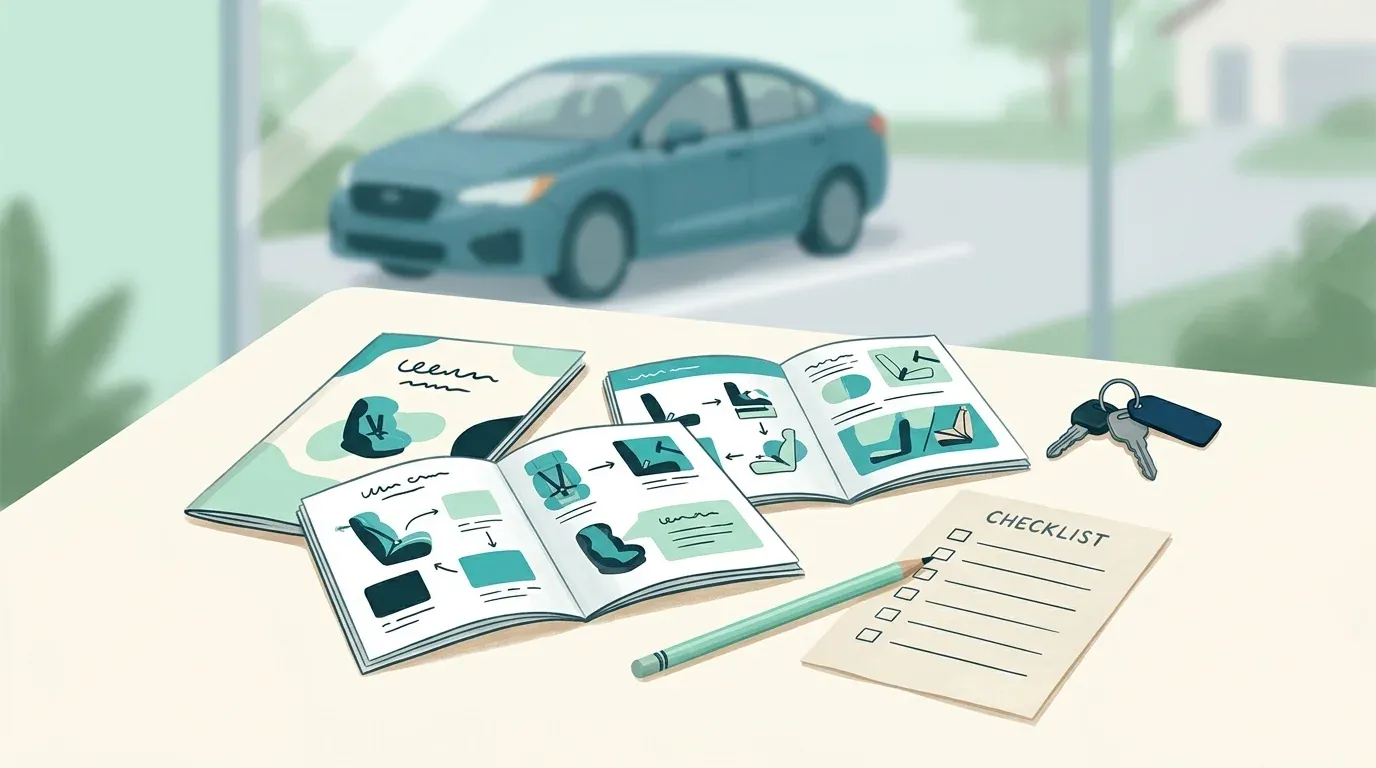
Safer New Mexico Now’s appointment guidance asks families to bring the car seat, its manual, the vehicle used most often and its manual, plus the child if possible. That is a useful starting list to confirm with your own provider.
| Bring or prepare | What to confirm before leaving home |
|---|---|
| The seat you want checked | Explain which seat or seats the appointment covers. |
| Both manuals | Have the instructions for this seat and this vehicle accessible. |
| Your child’s information | Note current age, height and weight; ask about attendance. |
| Access to the vehicle | Check which seating and cargo areas the technician needs to reach. |
| A short question list | Put the uncertainty that prompted the visit first. |
For a concrete local example, Safe Kids Ventura County requests the child’s age, height and weight, both manuals, and clear access to the rear seat and relevant cargo area. It asks caregivers to dress comfortably because they will participate in installation. These are that programme’s instructions; check your organiser’s requirements too.
If you have already collected model numbers and manual links, bring your baby gear record sheet. It can save you searching through receipts while you are trying to learn.
Expect a learning session
The Manufacturers Alliance for Child Passenger Safety’s May 2020 caregiver handout, hosted by the National Child Passenger Safety Board, describes an interactive session and suggests asking to see current technician certification. It says the technician should review the manuals, assess the seat for recalls, visible damage and expiry, and guide the caregiver’s installation.
Use that description to prepare to participate. If a step is unclear, ask to see where it is explained in the applicable manual, then ask for another opportunity to practise with guidance. Do not treat a quick demonstration as the end of the conversation if you still cannot explain what you need to do.
This guide is deliberately not a checklist of belt paths, attachment points or harness settings. Those answers need to match the equipment and the child at the appointment.
Bring questions that lead to usable answers
These are our suggested conversation prompts, rather than instructions for using a seat:
- Which pages in these two manuals answer the question I brought today?
- Can I practise the part I find difficult while you watch?
- If we move this seat to another vehicle, what needs checking again?
- What should I do if a label is unreadable or the manuals appear to disagree?
- Who should I contact if we cannot resolve something here?
Keep unresolved points in your notes. Our recall-checking guide explains how to organise a separate recall search; it does not replace the equipment-specific discussion at a check.
Leave with a clear follow-up
Before leaving, write down the manual pages you used, the steps you practised and any question requiring follow-up. The May 2020 handout asks caregivers to consider whether they performed the installation, feel confident using the seat and had their questions answered or were given a next contact.
For your own notes, separate “answered today” from “still to confirm.” If something remains unresolved, ask the technician what action to take and whom to contact. Do not fill the gap with a guess from a general article.
How we prepared this guide
This is a research-based appointment-planning guide. We have not tested car seats or attended these programmes hands-on. We reviewed the four linked sources on 23 October 2026; the national caregiver handout retains its original May 2020 revision date. Local programme examples describe their published preparation requirements, not nationwide rules. Confirm current booking details with the provider and follow the instructions for your actual equipment.