A hand-me-down offer can arrive with a photograph and a friendly assurance that the item was barely used. Before arranging collection, ask for enough information to identify the equipment and understand what is still unknown. A useful reply is more specific than “it looks fine.”
This guide gives you questions for that conversation and a place to record the answers. It does not identify particular products to buy or certify that used equipment is suitable for your child. A completed worksheet is a record of enquiries, not permission to use an item.
Start the conversation before arranging collection
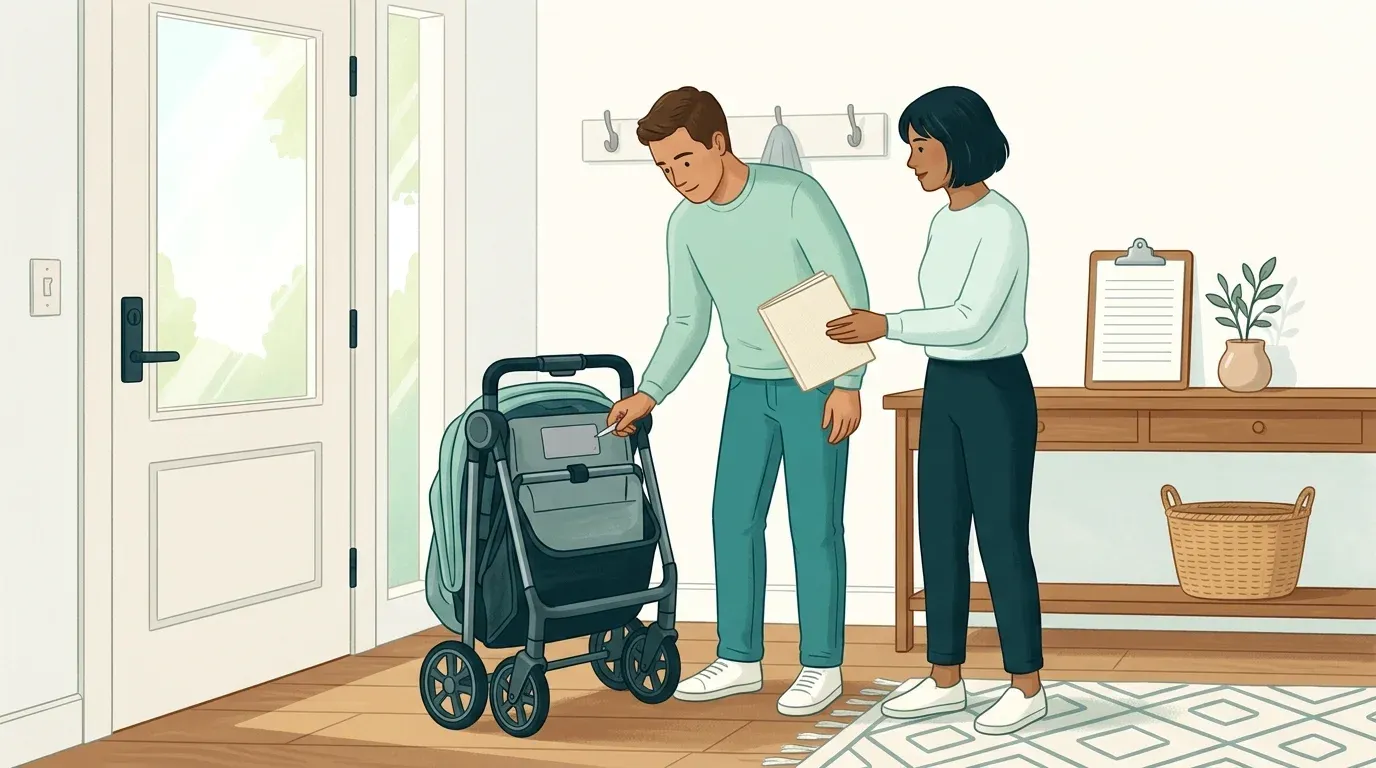
Ask the person offering the equipment for clear photographs of its model label, the complete item and any separate parts. Request the manufacturer’s name, exact model number and manufacture date as shown, along with the matching instructions if available. Explain that you want to check the details before making plans.
Try this message:
Thank you for offering this. Before we arrange collection, could you send a readable photo of its model label and tell me about its ownership history? Do you have the matching instructions and all the original parts? Please also mention damage, repairs, modifications or recall notices, including anything you are unsure about.
That wording is our suggested conversation starter. It does not turn the giver into an inspector or make an uncertain history reliable. Keep “I don’t know” in your notes rather than translating it into “no problem.”
Separate identity, condition and history
Use three headings rather than a single “good condition” box. Our original worksheet separates details you can record from questions that may need the manufacturer’s help.
| Heading | Ask the giver | Record for follow-up |
|---|---|---|
| Identity | What exact model is it, and can the label be read? | Label details and photographs; anything illegible |
| Condition and completeness | Is anything missing, damaged, loose, replaced or modified? | The specific issue, rather than a general appearance rating |
| History | Who has owned it, and what damage, incidents, repairs or notices are known? | What is known, who supplied the answer and what remains unknown |
| Instructions | Is the manual for this exact item available? | Official manual link or a question for manufacturer support |
The CPSC’s resale guidance warns resellers against selling broken or wobbly nursery furniture and durable infant equipment with missing parts, even without a recall. It also advises examining used products before resale. These are reasons to take an incomplete or damaged item seriously; a clean photograph is not an assessment of its condition.
Do not plan to solve an unidentified part or repair question with a lookalike component. Refer the exact issue to the manufacturer. If you cannot identify the equipment or resolve an important question, leave the arrangement unfinished rather than treating collection as a deadline to accept it.
Check recall information independently
Use the label details to investigate official notices yourself. The CPSC’s recalls and product safety warnings page provides a search tool and links to recall notices. Read the actual notice and its instructions when a possible match appears. Our recall-checking guide explains the process in more detail.
Record the source, date, identifiers searched and any notice that needs further investigation. “The giver has never heard of a recall” is a different statement from “we searched the official source using these identifiers.” Neither a reassuring message nor a search with no apparent match establishes the item’s condition or history.
Do not assume that an old notice is irrelevant. CPSC says recall-remedy information can change, including when a company stops operating or a remedy becomes unavailable. Follow the current notice and manufacturer contact route rather than an informal description of a past fix. This article has not checked or cleared any individual model.
Treat a used car seat as a separate enquiry
A general hand-me-down conversation is not enough for a car seat. NHTSA’s used car seat checklist asks whether the seat has avoided moderate or severe crashes, has its manufacture-date and model labels, has no recalls, includes all parts and has its instructions. Those identifiers are needed to investigate recalls and whether the seat is too old.
NHTSA says a seat may be okay to use when every statement can be checked. It does not offer unconditional approval. Its checklist directs readers to the manufacturer about recalls, missing parts and obtaining instructions.
If the crash history is unknown, do not fill that gap by judging how the seat looks. Keep the question unresolved and seek the manufacturer’s guidance. This guide does not interpret crash severity, set an expiration date or provide installation instructions. Use NHTSA’s full checklist and the exact manufacturer’s requirements for that separate decision.
Make a decision note, not a safety score
Before answering the offer, write a short note with four fields:
- What we can identify: the exact item and the evidence saved.
- What remains unresolved: missing history, parts, instructions or a possible notice.
- Who can answer: the giver, manufacturer or relevant official resource.
- Our next step: request more information, decline the offer or continue the model-specific assessment.
There is no points total or “pass” threshold. One unanswered question can matter more than several tidy documents. For sleep equipment and other specialised gear, continue with the relevant official guidance and manufacturer’s instructions; this general worksheet does not establish suitability for sleep or any other use.
If an item eventually becomes part of your household, keep the information with its equipment record sheet. If the offer does not meet your needs, return to the practical requirements in a relevant guide, such as how to choose a stroller, before comparing alternatives. Accepting an offer and choosing equipment are separate decisions.
How we prepared this guide
This is a research-based guide by the Fresh Baby Gear Team using official US CPSC and NHTSA resources opened October 18, 2026. We have not tested products, inspected secondhand equipment or verified an individual item’s history. The message template, worksheet and decision note are our original editorial tools. There are no named product recommendations or affiliate offers. Readers outside the United States should also consult their local product-safety authority. The cover is a generic illustration, not a photograph of equipment we assessed.