Before putting a stroller away for a season or between children, make three plans: how to clean it according to its own instructions, where it can dry completely, and how to keep its parts and records together. A compact fold is only the last part of the job.
This guide helps organize that break in use. It does not assess a particular stroller’s condition or establish that stored equipment is ready for another child.
Start with the labels, not a universal cleaning recipe
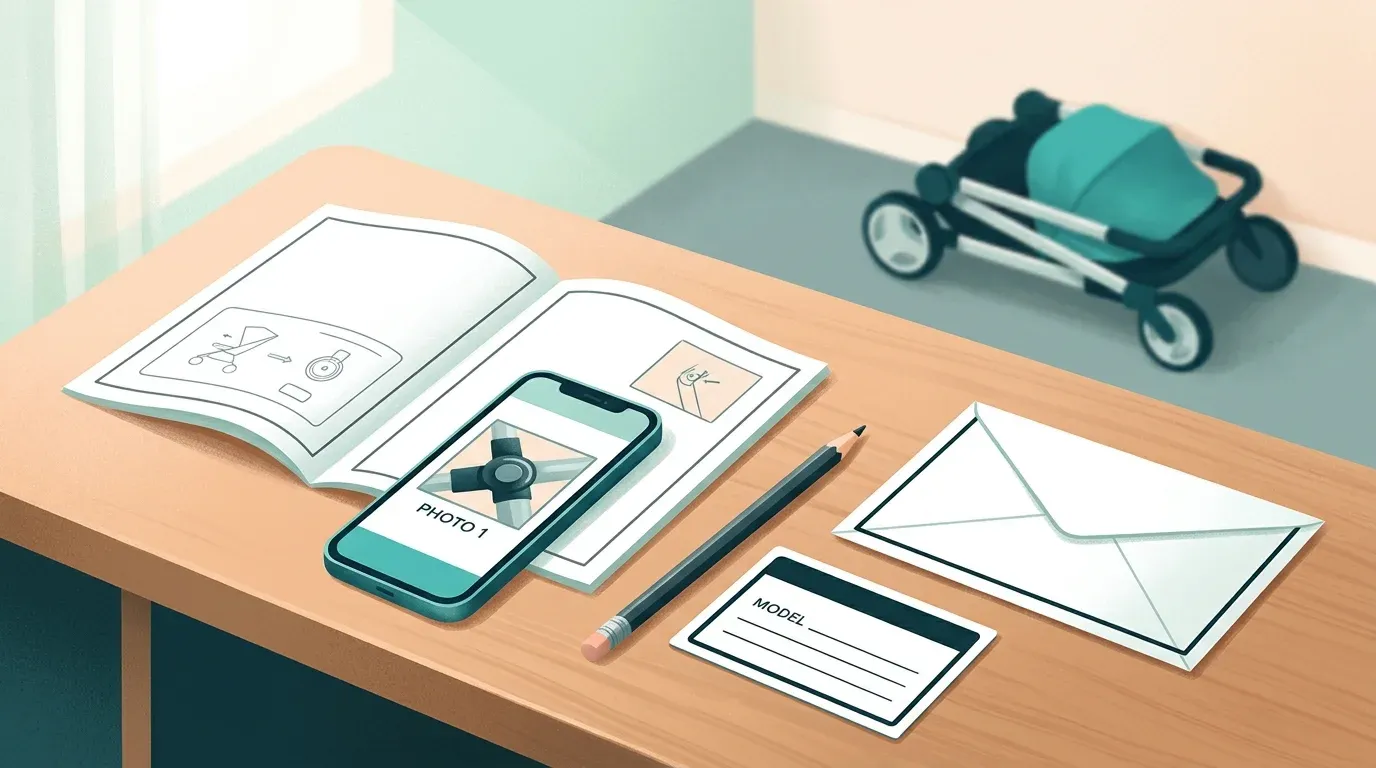
Find the manual for your exact stroller and photograph its care labels before removing anything. CPSC identification guidance includes strollers among durable infant products and requires permanent model and manufacture-date markings. Keep those details in your private baby gear record.
The care instructions determine which pieces can come off, how each is cleaned, and how they go back. Do not assume a detachable fabric is machine-washable. Bugaboo’s Canadian cleaning guidance distinguishes washable fabrics from exceptions and directs owners to the labels. That regional guidance illustrates why a blanket instruction is unhelpful; your own model’s directions govern.
Make a short list for the frame, wheels, seat fabric, canopy and basket. Beside each, note the applicable care label or manual section. Leave an unanswered cleaning question for manufacturer support instead of guessing a temperature, chemical or disassembly method.
Leave time and space for drying
Choose the drying space before starting a wash. In its November 19, 2026 care article, Bugaboo advises complete air-drying before reassembly and dry, ventilated storage; it warns about putting a wet stroller away folded. These are manufacturer care instructions, not a promise that cleaning restores damaged equipment.
For your storage plan, separate “cleaning finished” from “ready to put away.” Follow the applicable instructions for drying as well as washing. If the planned storage space is damp, reconsider that location before packing the stroller there. Avoid setting a deadline that requires folding it while still wet.
Keep a parts inventory with the instructions
Our suggested inventory is simple: take an overall photo before any permitted removal, then list each part you remove and where you put it. Use the manual’s names when you can. Photographs help you keep track; they do not replace assembly directions.
Keep small detached pieces together in a separate, identified container with the stored equipment. Record the location of the manual and any manufacturer reply, too. Before using the stroller again, follow its complete reassembly instructions. Bugaboo’s Canadian guidance specifically calls for dry parts to be returned to their original positions before use.
If something is missing or unclear, collect the identifiers before asking support. Graco’s instructions and parts page, for example, provides a model-number manual finder and asks for model number and manufacture date for parts enquiries. Our replacement-parts request checklist helps organize that message. This is a support route, not permission to substitute a similar-looking part.
Make one storage note for the next person
Copy this original worksheet into your gear record:
| Record | What to write |
|---|---|
| Identity | Model, manufacture date and location of the label photo |
| Care | Manual link and relevant cleaning, drying and reassembly sections |
| Work completed | Date and a plain description of what you actually did |
| Parts | Removed pieces, container location and anything missing |
| Open questions | Visible damage or an unanswered question for support |
| Storage | Location and date put away |
| Next handover | Who will retrieve the instructions and follow up on open questions |
Keep observations specific: “canopy washed according to label; drying unfinished” is more useful than “all sorted.” Do not mark an unanswered question as resolved merely because the stroller has been packed away.
Before the stroller returns to use
Reopen the record, retrieve the parts and read the applicable instructions again. Use our recall-checking guide for that separate check. Storage photos and a clean appearance do not provide a recall clearance or a condition assessment.
For missing pieces, visible damage or an instruction you cannot reconcile, ask the manufacturer about the exact equipment before returning it to use. The useful outcome of storage preparation is a clear record of what is present, what was done and what still needs an answer.
How we researched this guide
This is a research-based guide by the Fresh Baby Gear Team, based on official care, support and product-identification sources opened November 25, 2026. We have not tested cleaning methods, stored a stroller for this article or inspected readers’ equipment. The worksheet is our own organizational aid. Manufacturer examples explain documentation; there are no individual product recommendations or shopping offers. The cover shows generic equipment.