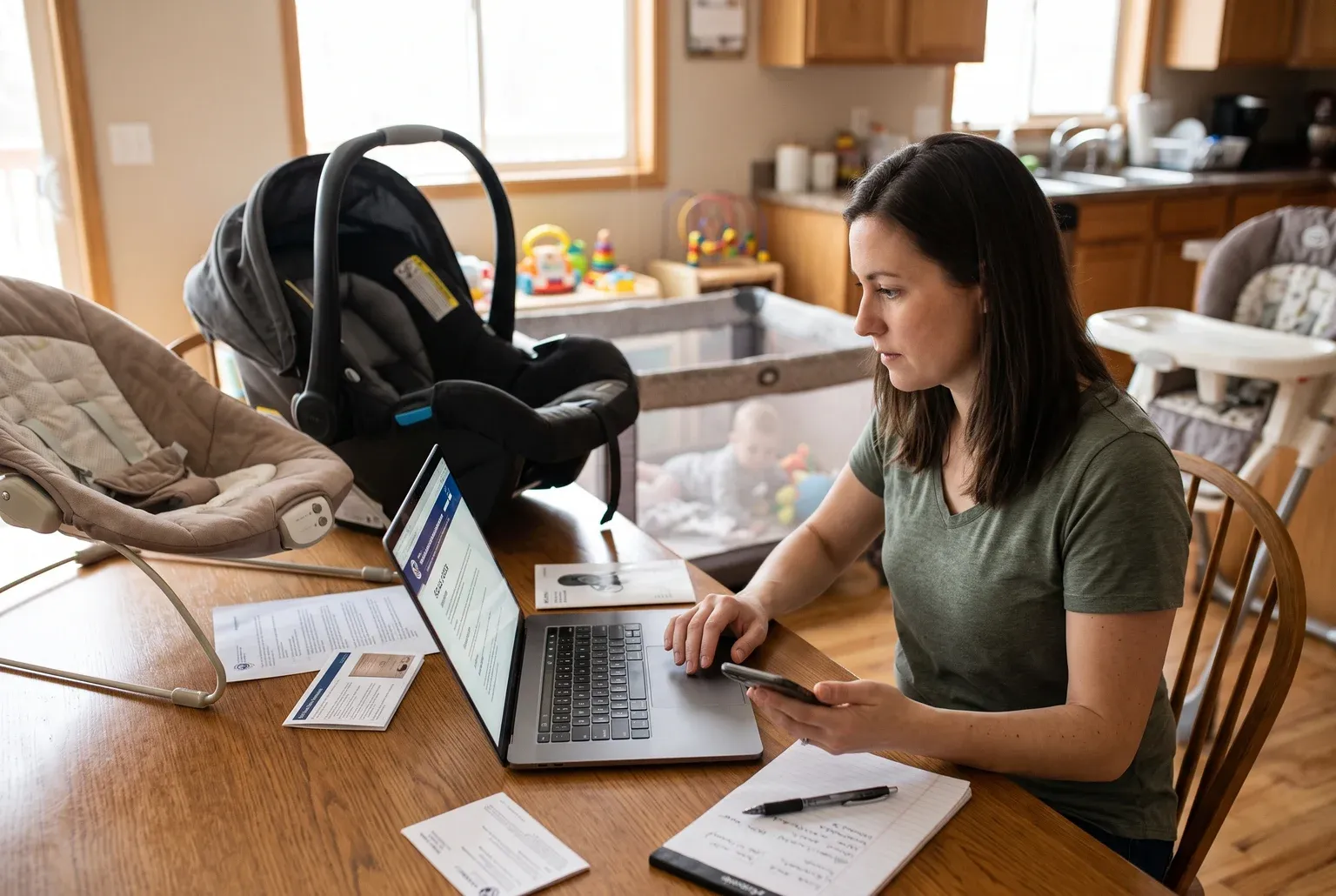
A recall email is useful only if someone notices it and knows what to do next. Set up the contact routes, then agree which adult will read an alert and tell everyone who uses the equipment.
This guide is for US families organising future notifications. To investigate equipment you already own, use our recall-checking guide. Here, the question is different: where will a new notice arrive, and who will follow it through?
Give the manufacturer a direct contact route
The CPSC’s registration FAQ explains that registration for covered durable infant and toddler equipment lets a manufacturer or retailer contact owners about recalls or other safety information. Covered categories include strollers, high chairs and play yards. The supplied card includes equipment identifiers, and an online or email registration option must also be provided.
Our suggested approach is to finish one item’s registration before starting the next. Use the supplied card or the manufacturer’s official registration route, copy the identifiers carefully and record the date submitted. If you cannot establish the right route or details, ask the manufacturer rather than guessing.
Keep that task separate from creating a shopping account. CPSC says information collected under this registration rule is restricted to safety alerts and recalls, not marketing. That statement concerns the covered registration process; it is not a promise about every retailer account or newsletter.
For the identifiers you need, consult your baby gear record sheet. A household note saying “registered” should point to the route used and any confirmation received.
Add the separate car-seat notification routes
NHTSA’s registration guidance advises registering a car seat with its manufacturer using the supplied card or the manufacturer’s website. It also offers a separate email-alert signup for car-seat and booster-seat recalls.
Treat these as two entries in your plan: manufacturer registration and NHTSA alerts. Completing one is not a record that you completed the other. Start from NHTSA’s official page and follow its current registration or email links; this guide does not submit anything for you.
If a registration attempt fails, save the question that needs answering, such as an unrecognised model identifier. NHTSA’s registration section includes a help contact for people unable to register with the manufacturer.
Subscribe, then check what actually happened
The official Recalls.gov subscription page links to CPSC recall emails and other agencies’ alert services. It notes that, depending on the list, a confirmation message may require a reply. Follow the instructions in the actual signup process.
Our suggested setup note has four fields:
- Service: the official notification route you chose.
- Destination: the email address you submitted.
- Progress: submitted, confirmation requested, or confirmation saved.
- Reader: the adult responsible for reviewing incoming notices.
After signing up, check the inbox and spam folder for any requested confirmation. Do not mark a subscription confirmed merely because you filled in a form. If the result is unclear, revisit the service’s own instructions. An empty inbox does not establish that no recall applies to your equipment.
Agree on a handoff before the first alert
Choose one person to check incoming notices and another who can take over when needed. This is our organisational suggestion, not an agency requirement. A shared reminder is enough; there is no need to share email passwords.
When a potentially relevant notice arrives, use this short handoff:
I received a notice on [date]. The official notice is [link]. We need to check [equipment identifiers]. [Name] will read the notice and contact [manufacturer or agency] if anything is unclear. We will tell [other caregivers] the confirmed instructions.
Keep the original official notice available to everyone who needs it. A forwarded subject line or a shortened summary can leave questions unanswered. Follow the actual notice’s instructions and ask the named official contact about uncertainty; this page supplies no repair, disposal or continued-use decision.
For a concern you have observed yourself, our safety-reporting guide explains what information to gather. Receiving alerts and reporting a concern are separate tasks.
Revisit the plan when contact details change
Our suggested review triggers are a changed email address, a move or a different adult taking responsibility for the equipment. Check which registration and subscription services need updated details and use each service’s own process. Do not assume an address change in a shopping account reaches every registration record.
The practical end point is a short, usable note: registered where, alerts sent where, read by whom, unresolved question. Registration is a communication step, not an inspection or a guarantee that an item is safe.
How we prepared this guide
This is a research-based guide by the Fresh Baby Gear Team, using official CPSC and NHTSA pages opened October 28, 2026. We have not tested individual registration systems, email delivery or equipment. The setup note, handoff wording and review triggers are our original organisation tools. There are no named product recommendations or affiliate offers. Families elsewhere should use their local authorities and the registration process for their market.