If something about baby gear seems unsafe, a clear account helps you explain the concern without guessing at its cause. Start with the exact item, what you observed and when it happened. Keep questions separate from facts.
This guide helps families prepare and route a report in the United States. It does not assess whether equipment can continue to be used or tell you how to repair it. Follow any applicable recall notice and seek instructions from the manufacturer about the particular concern. Do not recreate a suspected failure to obtain a better photograph or description.
Choose the reporting route
For consumer products within its remit, the CPSC offers SaferProducts.gov’s unsafe-product reporting service. The page also lists alternatives to the online form. Read its scope information before starting; every item sold for a baby does not necessarily go to the same agency.
Car seats have a separate route. NHTSA’s safety-defects booklet covers car seats and booster seats among motor-vehicle equipment and explains how to report a suspected safety defect through NHTSA. Use the agency’s reporting service for that concern rather than assuming the CPSC form covers it.
A report about a possible hazard and a request about an order can have different purposes. SaferProducts.gov’s submission FAQ says complaints solely about cost or quality are not published there. A late delivery or an unwanted colour, without a safety concern, belongs in a discussion with the seller. Describe a suspected safety problem directly instead of turning it into a general review of the purchase.
Identify the item before describing the problem
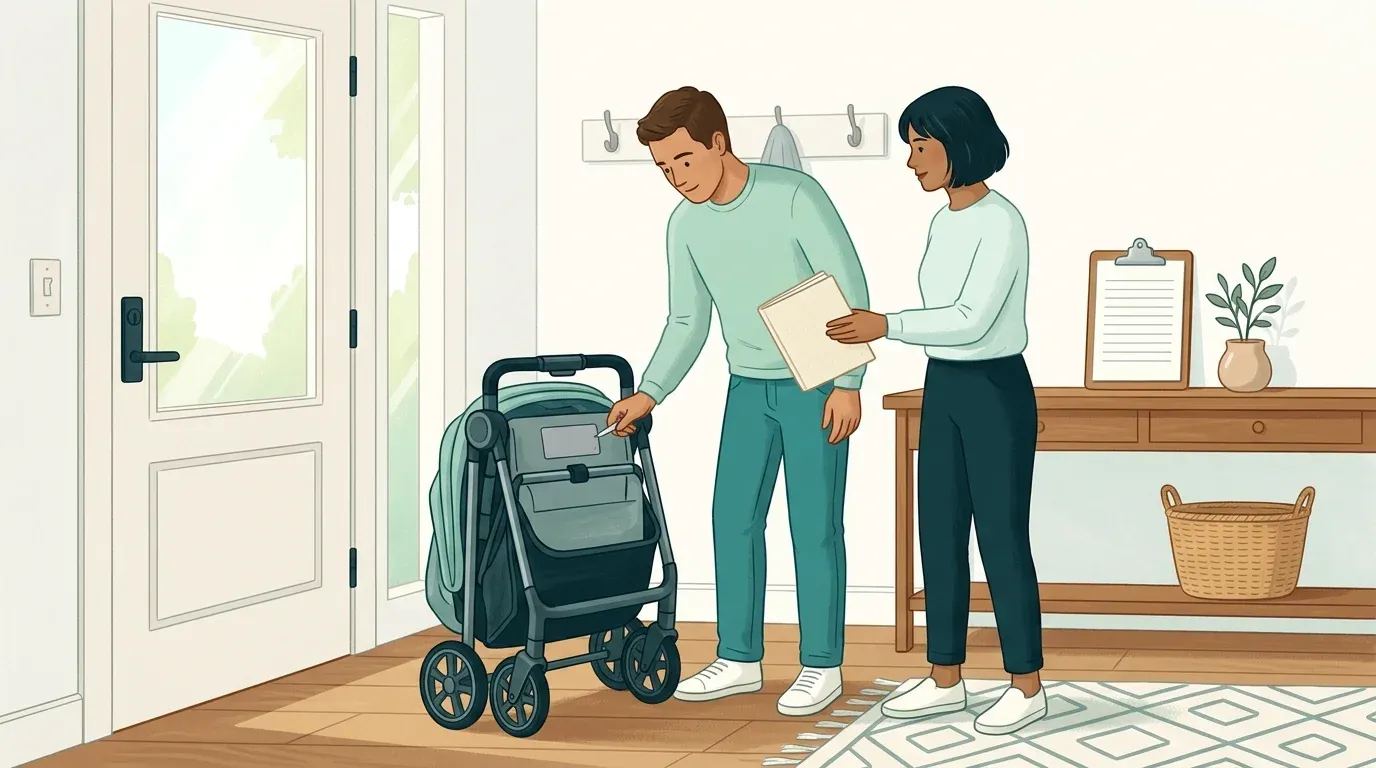
The official CPSC report form requests identifying details such as the brand, model, serial number and manufacture date or code. Gather the label details you can read, the matching manual and any purchase record you already have. Our baby gear record sheet gives those documents a home. For this report, use the identifiers on the actual item; a shop’s shortened listing title may leave important details unanswered.
Our suggested preparation note has two parts:
| Item details | Your record |
|---|---|
| Brand and manufacturer or importer | Copy what the label says |
| Model, serial or batch identifiers | Transcribe visible details; mark anything unreadable |
| Manufacture date or date code | Keep the original format if shown |
| Purchase record and manual | Note where the existing files are saved |
These are organisational prompts, not a substitute for the reporting service’s required fields. If you cannot establish a detail, say what is missing. Avoid borrowing a model number from a similar-looking item.
Write a short account of what you observed
The submission FAQ asks for a product description, the manufacturer or private labeler, the incident or risk and its actual or approximate date, among other information. A concern can describe a risk without claiming that an injury occurred.
Before filling in the official form, write a few plain sentences answering these questions:
- What was happening immediately before the concern arose?
- What did you actually see, hear or find?
- When did this happen, and is the date exact or approximate?
- Which details did you observe yourself, and which came from someone else?
- What remains unknown?
For example, recording the position where a loose piece was found is different from asserting why it detached. Keep your own description accurate without trying to supply an engineering conclusion.
CPSC’s information for consumers contacted by an investigator explains that questions may cover the item’s history and what happened before the incident. Investigators may also request records such as receipts and manuals. Keep existing documents together so you can locate them if asked; this does not mean every report will lead to an investigator contacting you.
Read the privacy choices before submitting
SaferProducts.gov says the submitter’s name and contact details are not posted in its public database. Its FAQ explains a separate choice about allowing those details to be shared with the named manufacturer. Read those permissions on the actual form rather than assuming that submitting, publishing and sharing contact information are the same choice.
Keep a private copy of your account and review any attachments before submitting them. Follow the service’s instructions about personal information. Our preparation worksheet is for your own folder, not a suggestion to publish a child’s details or private documents on social media.
Keep follow-up and recall checks separate
After submitting, save the confirmation and any reference details the service supplies. In your own notes, record who submitted it, the date, which agency received it and where replies will arrive. If you also contact the manufacturer, keep that conversation alongside the report with its own reference number.
The CPSC actions FAQ says staff examine every report but cannot investigate and respond to each one individually. A submission therefore does not promise a personal investigation or a particular outcome.
Record a recall search separately using our guide to checking baby product recalls. Reporting your concern does not itself establish that a recall has been issued, and a saved submission is not clearance to resume using equipment. Follow the applicable official notice and the manufacturer’s instructions rather than making a repair plan from the reporting process.
How we prepared this guide
This is a research-based guide by the Fresh Baby Gear Team using official US sources opened on October 25, 2026. We have not tested equipment, investigated an incident or submitted a report on a reader’s behalf. The preparation notes and filing suggestions are our original editorial tools. There are no individual product picks or affiliate offers. Use the relevant reporting authority for your location outside the United States.