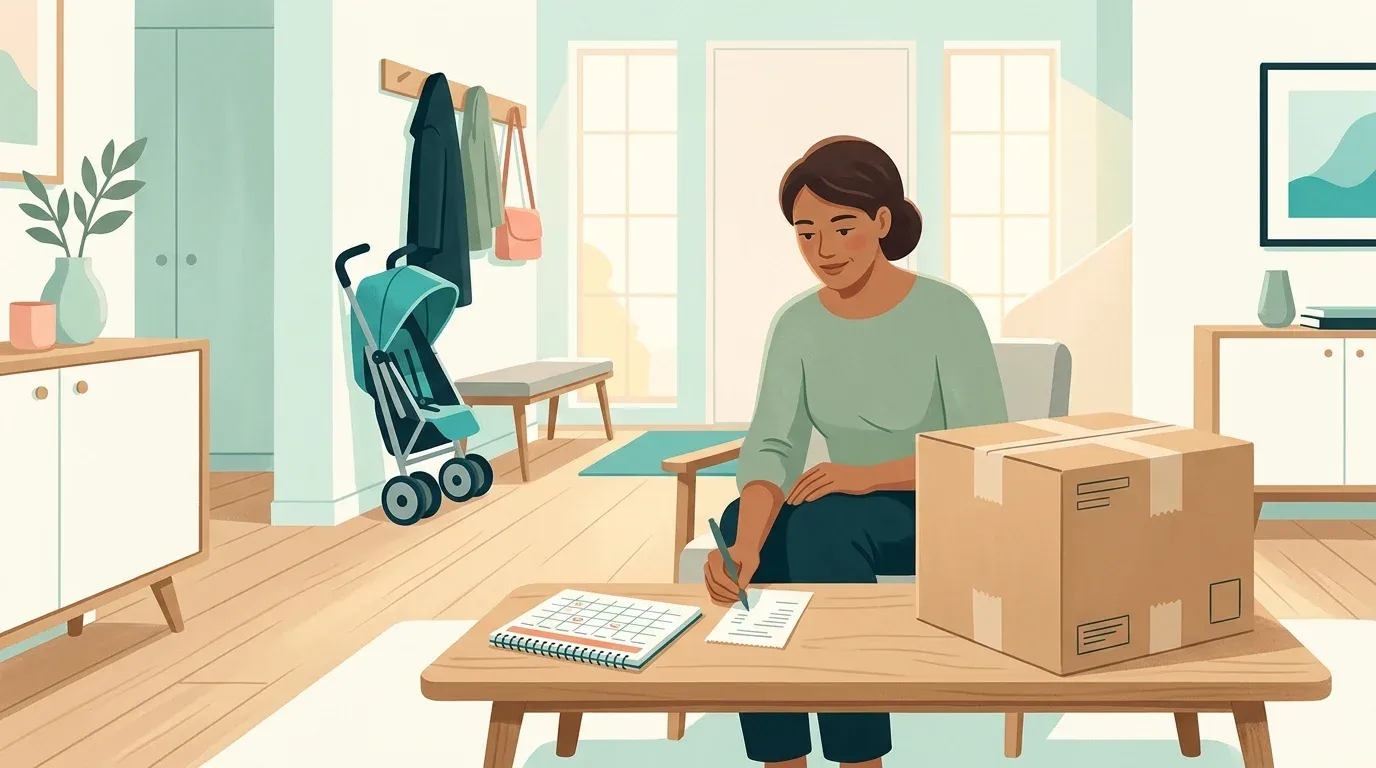
A delivery can arrive well before you need the equipment inside. Before opening every box, give each order a quick paperwork check: who sold it, what the return conditions say and which date needs your attention. That makes the decision to keep, exchange or query an item more deliberate.
This guide is for organising baby gear purchases in the United States. It does not assess an individual seller’s policy or promise that opened, assembled or unused equipment qualifies for a return. Use the actual terms for your order, and ask the seller when an answer is unclear.
Read the policy for the specific order
The FTC’s online shopping guidance recommends checking the return period, return shipping responsibility and restocking charges. It also warns that sale and clearance purchases can have different terms.
Save the policy alongside the order confirmation. Record the seller shown on that order rather than relying on the name of the shopping website alone. Our suggested planning step is to complete the table below before removing tags, assembling equipment or washing removable fabric. Those actions are questions to ask about, not universal reasons a return must be refused.
| Check | Write down or ask |
|---|---|
| Seller and order | Seller name, order number and a link to the order-specific terms |
| Deadline | Exact date and the event it runs from: purchase, dispatch, delivery or another stated point |
| What meets the deadline | Does the seller require a request, carrier scan or arrival at its warehouse? |
| Opening and setup | What conditions apply to opened packaging, assembly, removed tags or washed fabric? |
| Return route | Is approval needed first, and which return address or drop-off method applies? |
| Cost and outcome | Shipping or collection costs, any fee, and whether the offered outcome is refund, exchange or credit |
If you received a gift, add one more question: which receipt or order details should the recipient provide? Do not assume the purchaser’s account instructions also describe the recipient’s process.
Make a small unpacking record
The FTC’s problem-resolution guide advises collecting purchase documents and bringing available tags and original packaging when returning to a store. It also recommends checking deadlines promptly.
Our practical way to apply that advice is to make one folder per order. Save the receipt, policy and support messages together. Before unpacking, consider taking a photo of the delivered package and its identifying label; if there is visible damage, record that too. These are suggested records, not a guarantee that a seller will accept particular evidence.
Keep packaging you may need until you understand the process. Ask before discarding a bulky box if the policy is unclear. A note saying “packaging question sent; answer pending” is more useful than assuming a return label will solve every collection or packing requirement.
For equipment you keep, move the useful documents into your baby gear record sheet. You can keep return reminders beside your before-baby-arrives planning checklist without turning either document into a list of extra purchases.
Ask one clear question before the next step
Use this original message template when the policy leaves an important detail unanswered:
I am checking the return conditions for order [order number], delivered on [date]. Before I [open the packaging / assemble it / remove tags], please confirm whether that affects a change-of-mind return. What is the exact deadline, what needs to happen by that date, which packaging is required, and what return costs apply? Please send the instructions for this order.
Replace the bracketed text with your details and remove irrelevant questions. Save the answer with the order. Put any confirmed date in your calendar, with enough time to follow the stated process. Do not invent a grace period if the seller has not given one.
Separate a return question from a warranty question
A change-of-mind query and a fault report may need different information. The FTC’s warranty guidance explains that written coverage varies: check its duration, exclusions, available remedy, contact route and any shipping costs. Save the warranty and receipt together. A warranty should not be treated as an automatic promise of a refund.
If an item arrives damaged or seems defective, describe that issue accurately rather than submitting it as an ordinary preference change. Ask the seller how it wants the problem documented and handled. The FTC notes that manufacturer contact may be needed for a defective item after the seller’s return deadline. This article does not decide which remedy applies to your order.
When contacting support, state the problem and the outcome you are requesting. Keep dated notes of the response and promised next steps, as the FTC recommends. Avoid making modifications in the hope of resolving a return question yourself; ask for the applicable instructions.
Finish with a decision and a next action
Our suggested closing note has three lines:
- Decision: keep, request a return or exchange, or wait for a specific answer.
- Next action: who to contact, what to send and the confirmed date to act.
- Evidence saved: policy, receipt, messages and any requested photographs.
For example: “Waiting for written confirmation about assembly. Contact the seller through the order page today. Policy and receipt saved.” This is an organisational example, not a statement about any retailer’s rules.
If the equipment does not fit your household’s needs, revisit those requirements before ordering again. A guide such as how to choose a stroller can help organise that separate buying decision.
How we prepared this guide
This is a research-based guide by the Fresh Baby Gear Team, based on official FTC consumer resources opened October 19, 2026. We have not tested products or return services, and have not assessed a particular retailer’s terms. The worksheet, message and decision note are our original editorial tools. There are no named product recommendations or affiliate offers. Readers outside the United States should consult their local consumer resources. The cover is a generic illustration.