Before settling on a dresser’s new position, include anchoring in the room plan. Knowing where a piece of furniture looks best does not answer how it will be secured there. Gather its instructions and resolve the attachment questions before treating the rearrangement as finished.
The US Consumer Product Safety Commission’s Anchor It! guidance tells families to follow manufacturer instructions when securing furniture and TVs. It also advises installing the anti-tip devices supplied with new furniture right away. This guide helps you organise that work; the actual attachment method must come from the applicable instructions.
Start with the furniture, not a shopping list
Make a short list of the dressers, bookcases and TVs in the rooms your child uses or visits. In its July 2025 Anchor It! announcement, CPSC specifically urges families to anchor TVs and furniture such as bookcases and dressers securely to the wall. Keep that wider view when planning a nursery; the adjacent living room matters too.
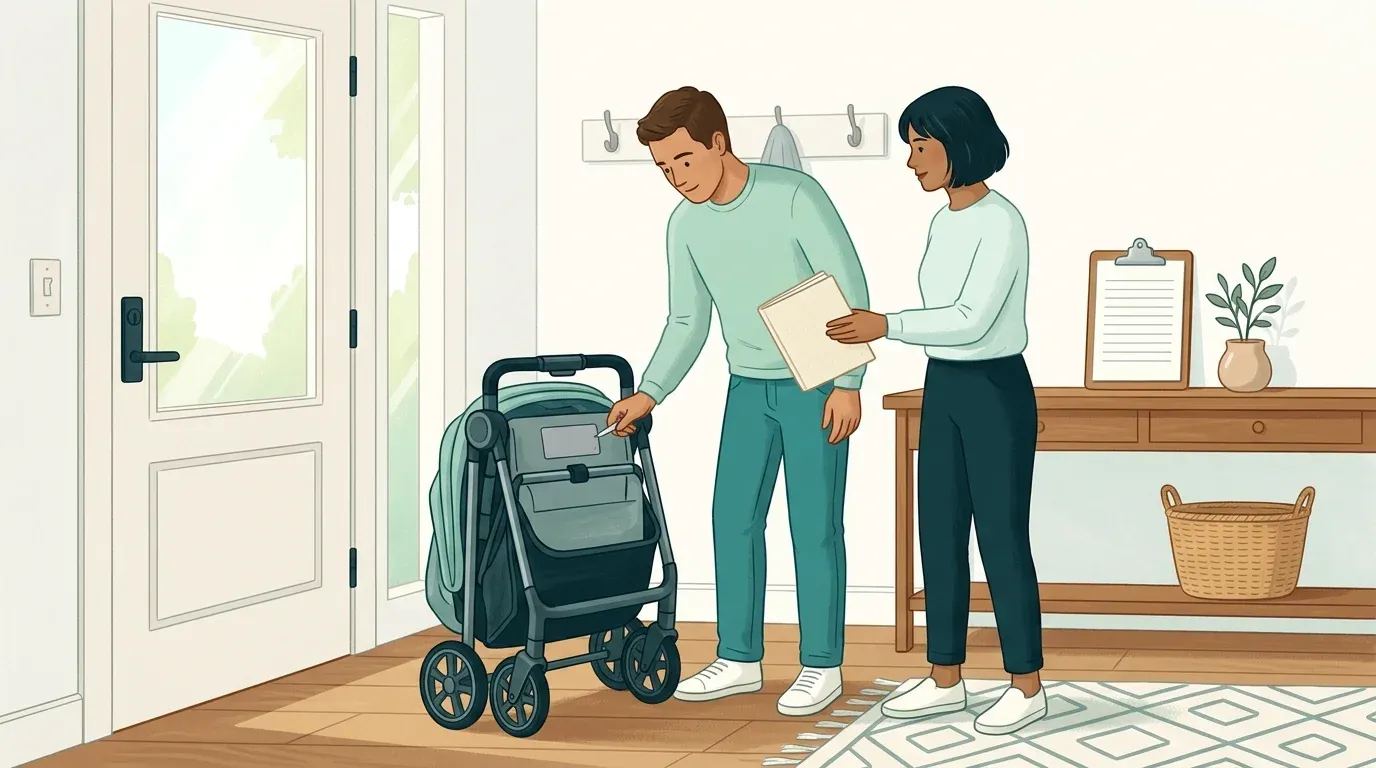
For each item, find the model label, the assembly instructions and the section about securing it. If you cannot identify the furniture or find its instructions, put that question first. Ask the manufacturer for the document that matches the actual piece rather than treating a similar-looking dresser’s manual as a match.
Our baby gear record sheet offers a way to keep model details and manual links together. You can also use our recall-checking guide to organise a separate search before proceeding. An anchoring plan does not establish that a particular piece is free from recalls.
Make the proposed location a question to resolve
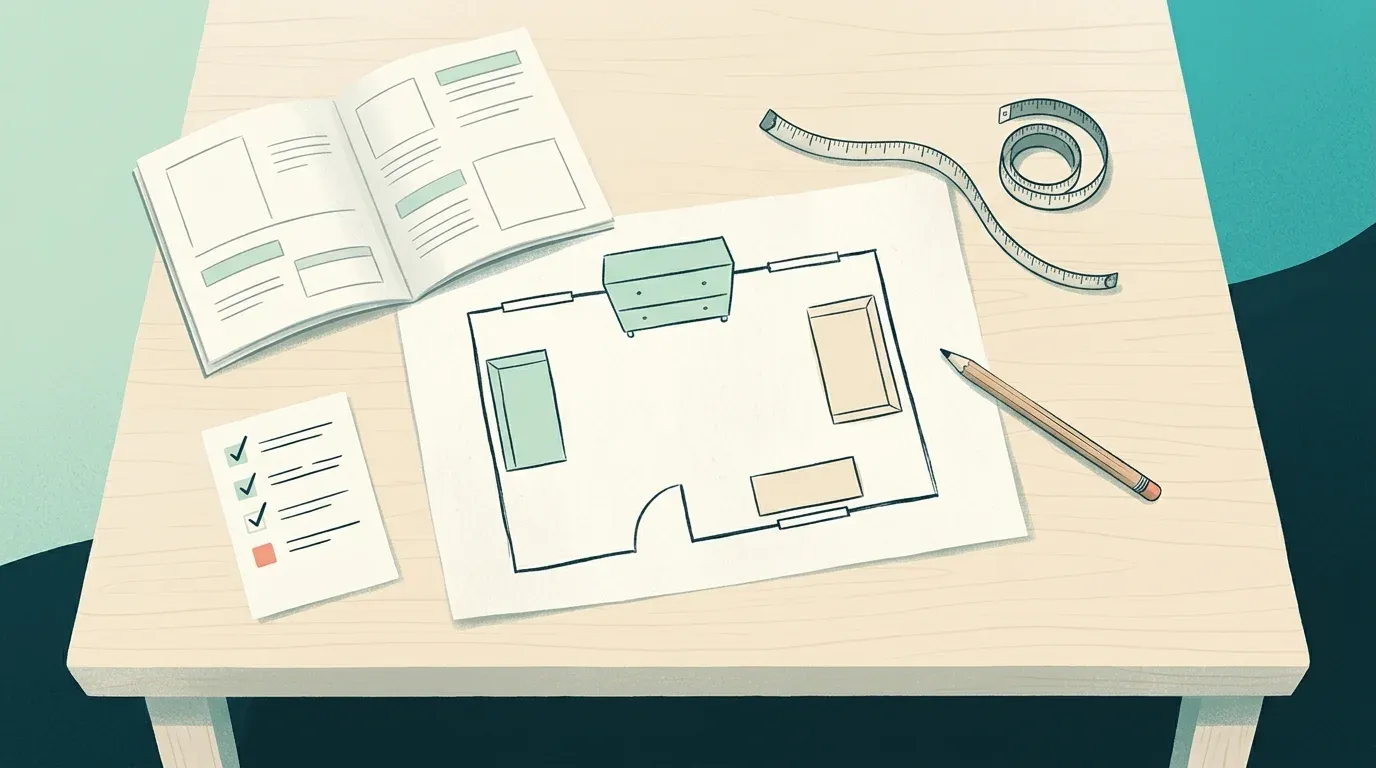
Sketch the room and mark the intended furniture positions. Beside each one, note what you still need to confirm with the manufacturer or the person doing the installation. For example:
- Do we have the complete instructions for this piece and its restraint?
- What information about the wall does the installer need?
- Is any supplied attachment hardware missing or unidentified?
- Can this furniture be secured as instructed in the proposed position?
- Who will resolve the questions before the furniture is put into use there?
These are our planning prompts, not a drilling guide. This article does not specify fasteners, attachment points or a method for any wall. If you cannot establish the correct method, seek qualified installation help and the manufacturer’s guidance instead of improvising an attachment.
Use a worksheet that exposes unfinished work
Write down the answer or the next person to contact. A vague note such as “sort out dresser later” is easy to lose among decorating jobs.
| Item and intended room | Instructions and next action |
|---|---|
| Dresser in nursery | Record model, manual link and unanswered attachment question. |
| Bookcase in living room | Confirm its instructions and who will complete securing it. |
| TV in a room the child visits | Identify the TV and furniture instructions; list both questions. |
| Furniture being moved | Arrange a review of how it will be secured in the new position. |
This worksheet is an organisational suggestion. Completing its boxes is not a test or certification of the installation. Record what was actually done, which instructions were followed and anything still unresolved.
Plan what goes on the furniture, too
CPSC’s July 2025 advice also says to keep heavier items on lower shelves and avoid storing appealing objects where children may climb to reach them. Think about this while deciding where everyday items will live, rather than adding storage after the room is arranged.
The agency’s Anchor It! page calls out toys and remote controls on furniture tops as examples of climbing temptations. Include those surfaces in your room review. Tidying the top is a separate action from securing the furniture; include both in the plan.
Keep a follow-up task after the room is finished
Health Canada’s furniture tip-over guidance, dated January 2025, advises regularly checking that furniture remains stable and secure. It also recommends reading labels and asking the manufacturer or retailer about safety features. We use that general maintenance advice here, not Canadian legal requirements or a universal attachment specification.
Our practical suggestion is to keep the relevant instructions with your room notes and add a reminder to review them when furniture is moved or the room changes. Follow any inspection or maintenance directions in those instructions. An unanswered question should stay visible until the manufacturer or a qualified installer resolves it.
How we prepared this guide
This is a research-based preparation guide. We have not tested furniture, restraints or installations hands-on. We reviewed the three linked official sources on 24 October 2026. The CPSC announcement retains its July 2025 publication date and the Health Canada page its January 2025 date. The worksheet and contact prompts are our editorial suggestions; they do not replace equipment-specific instructions or an assessment of your room.