The choice starts with your camera position and charging routine. Both models use a dedicated parent screen without home Wi-Fi. The VM819 is worth considering when one carefully positioned view is enough. The DXR-8 PRO adds a larger screen and remote camera movement, which may matter more when you regularly need to change the view.
Screen and camera: start with the room
VTech’s VM819 documentation lists a 2.8-inch, 270p display, a fixed-position camera and 2x digital zoom. Choose the camera location before deciding whether that smaller screen will work for you. If you would frequently need to walk into the room to adjust it, a fixed camera may be frustrating.
Infant Optics lists a 5-inch HD display, remote pan/tilt/zoom and interchangeable lenses for the DXR-8 PRO. Those controls offer more ways to frame the room. Check the exact kit’s included lenses rather than assuming every accessory is bundled.
A larger display is a specification, not proof of better night-time detail. Decide what you need to see from your intended camera position, then check sample footage from an independent reviewer. For a broader shortlist, browse our baby monitor guide.
Battery evidence has an important date
VTech currently claims up to 19 hours of video use. In BabyGearLab’s VM819 review, dated October 11, 2022, its test unit lasted more than 16 hours; the reviewer also criticised picture and sound quality.
The same publisher’s DXR-8 PRO review, also dated October 11, 2022, measured six hours with the screen on. It liked the simple interface and background-noise reduction but found performance shortcomings.
These are historical tests of those reviewers’ units. They do not establish the runtime of a unit bought today. Battery age, settings and hardware revisions can affect your result. If you want the parent screen away from a socket for long stretches, put charging frequency near the top of your checklist and check the current manual before buying.
Local viewing: choose the access you need
Neither model requires home Wi-Fi for its dedicated screen, and neither needs a subscription for that local viewing function. Infant Optics specifies a replaceable parent-unit battery and active noise reduction for the PRO.
This comparison concerns DXR-8 PRO, not the original DXR-8 or the separate PRO SS. Match the model on the listing, packaging and manual before ordering. Do not choose either on the assumption that it provides phone viewing while you are away from home. If remote access is essential, investigate a different model in our baby monitors category.
Position cords carefully and recheck recalls
The CPSC’s cord-safety guidance says to keep monitors and cords at least three feet from the crib and out of a child’s reach. Never mount a monitor inside the crib or on its edge. Plan that separation before selecting a camera position.
Our October 13, 2026 manufacturer-name searches of the CPSC recall API returned no matching notice for VM819 or DXR-8 PRO. This is a dated search result with a limited scope, not a guarantee of safety. Use the exact label details and check for recalls again before using your purchase.
Which should you shortlist?
- VM819: consider it if a fixed view works and battery endurance matters more than screen size. Accept the small display and the limitations identified in the dated independent test.
- DXR-8 PRO: consider it if remote camera positioning and a larger screen solve a specific problem in your room. Plan convenient charging and check whether you need an extra lens.
Check the current offer, exact model, return terms and included accessories using the links above. We have not confirmed stock or a current price.
How we made this comparison
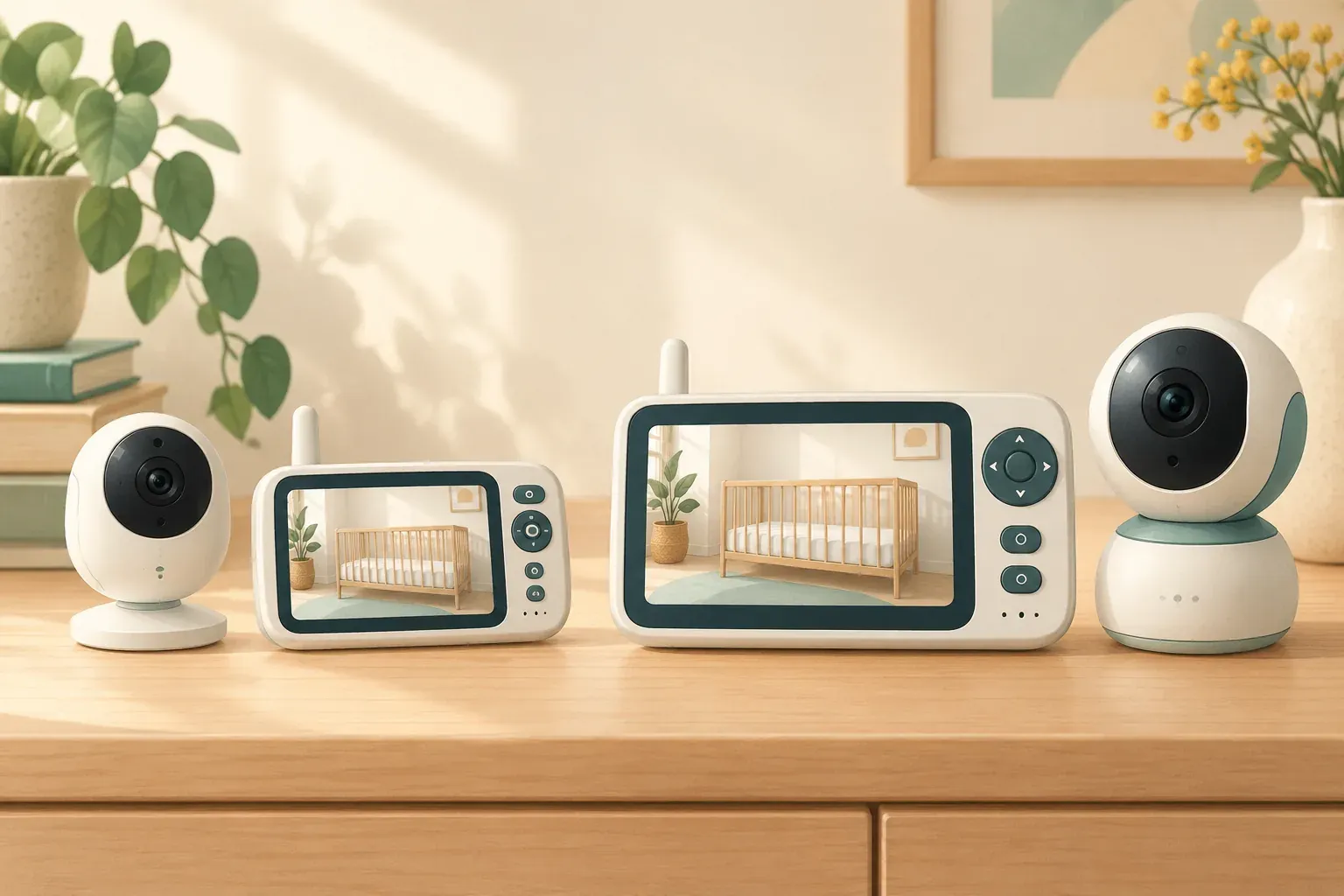
This is a research-based comparison. Fresh Baby Gear has not tested either monitor. The Fresh Baby Gear Team reviewed manufacturer documentation, original independent reviews and official safety information, accessed October 13, 2026. Recommendations are our interpretation of those sources and your likely setup needs. The illustration shows generic equipment.