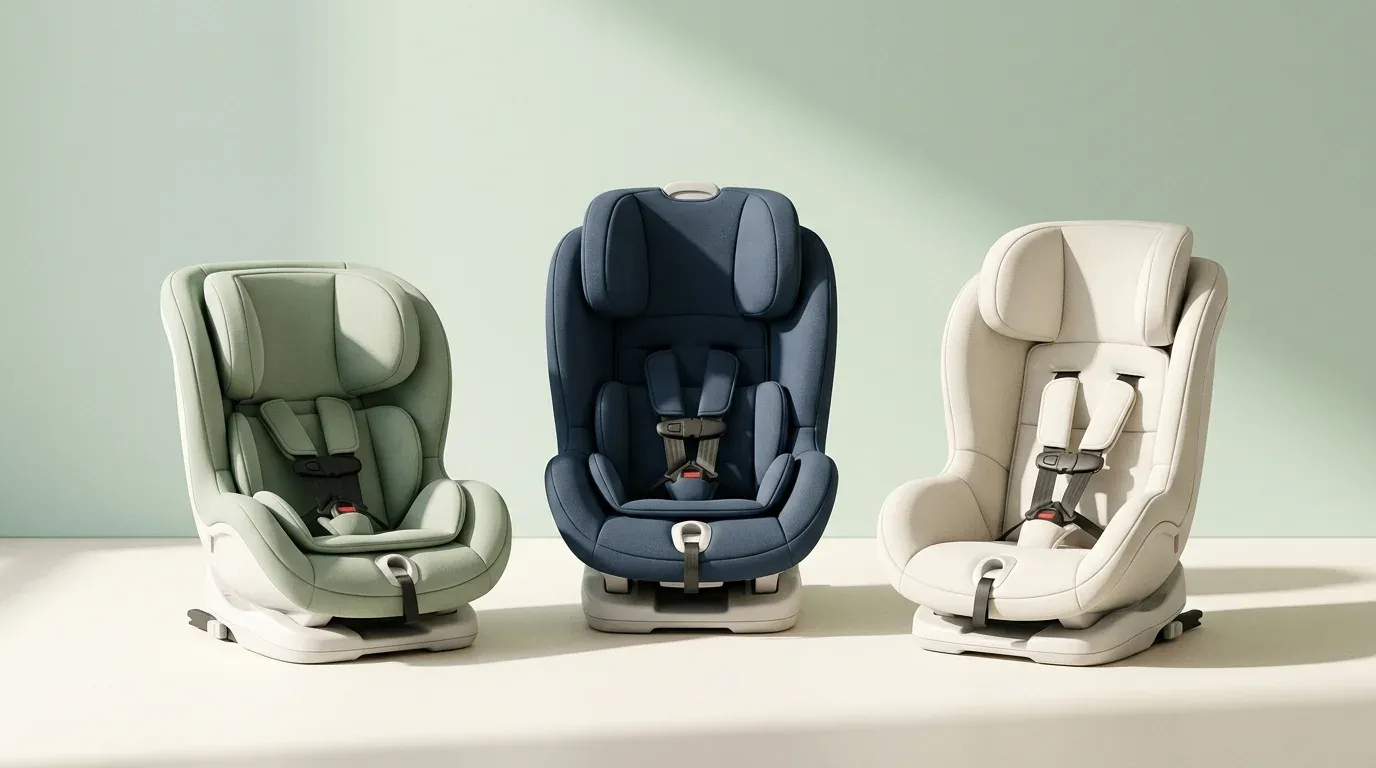
Before booking a flight with a car seat, separate three questions: does the restraint have the required aircraft certification, can it be used in the planned cabin seat, and does your booking include a seat for your child? An answer to one does not settle the others.
This guide helps families prepare those questions for US air travel. It does not approve an individual restraint or explain how to install one. For the rest of the journey, use our broader baby travel gear checklist.
Start with the child’s ticket
The FAA’s parent guidance strongly recommends an approved child restraint for the whole flight. It explains that buying a ticket is the only way to guarantee an opportunity to use a restraint for a child under two, rather than relying on an empty passenger seat.
American’s children’s travel policy says an infant travelling in their own seat needs a ticket. For a safety seat brought on board, American requires either a purchased seat for the child or an available adjacent seat; without that adjoining space, the gate agent checks the restraint to the final destination.
Our planning suggestion: decide the intended cabin arrangement before comparing fares. Write down whether the child’s own seat is included, then confirm the equipment and seating details below. Do not build a cabin-use plan around an unconfirmed spare seat.
Find the aircraft label and matching instructions
The FAA’s child-safety sheet identifies this certification wording:
This restraint is certified for use in motor vehicles and aircraft.
Its fuller parent guidance also recognises qualifying foreign-government approval with the required marking. If your restraint has different wording, ask the manufacturer and operating airline to clarify it. Do not create a replacement certification label from an online example.
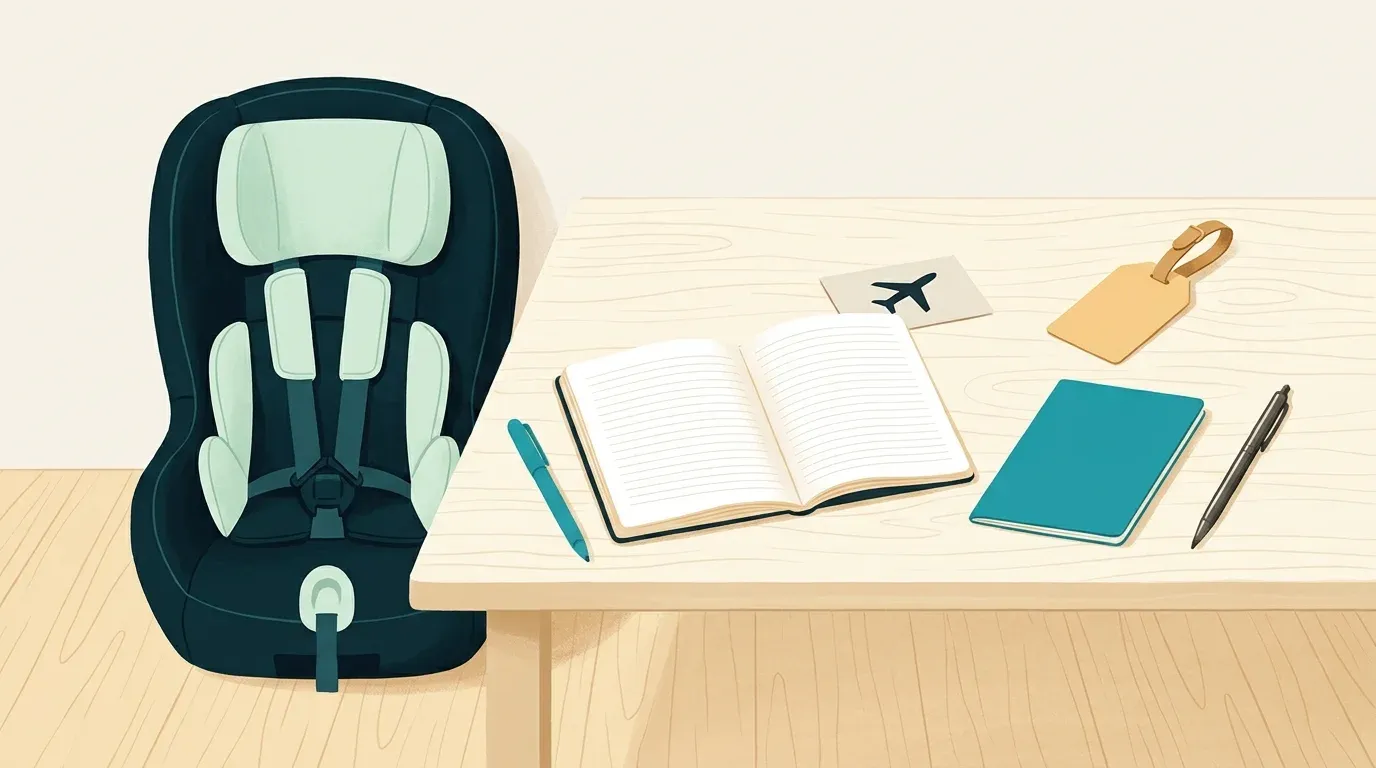
Keep a clear photograph of the actual label and the exact model details in your private trip notes. Find the matching manual’s aircraft-use section. The FAA directs families to check that the restraint can be secured properly in an aircraft seat and to follow its manufacturer’s instructions. A retailer’s general travel description cannot answer that model-specific question.
If a label is missing, unreadable or inconsistent with the manual, leave that question unresolved until you receive an authoritative answer. This checklist cannot infer approval from appearance or from a similar model.
Confirm the aircraft, cabin and seating position
American advises reviewing seat dimensions before travel and lists restrictions on child safety seats in certain First and Business cabins because of seat angles. A cabin upgrade therefore needs its own equipment check.
The FAA’s safety sheet says child restraints generally belong by a window, cannot occupy an exit row and must not obstruct an emergency escape path. Ask the airline which positions are appropriate for your flight rather than choosing solely from a seat-map picture.
Use this original question list when contacting the airline:
- Which aircraft and cabin are planned for each flight?
- Where can this exact restraint be used beside an accompanying adult?
- Which published seat dimensions should we compare with its documented dimensions?
- Does the planned seating arrangement create any additional restriction?
- What must we reconfirm if the aircraft or assigned seats change?
Keep the response with the flight details. Record who answered and when, alongside any unresolved fit question. A general statement that car seats are accepted is less useful than an answer tied to your model, cabin and flight.
Separate cabin use from baggage acceptance
Delta’s baggage page says children’s safety seats can be checked without counting toward standard baggage. Its cabin-use conditions are separate: they depend on an appropriate approved restraint and a purchased or available passenger seat. If neither a purchased seat nor an extra seat is available, Delta says the item must be gate-checked. The page also flags restrictions for some aircraft seats.
Those are Delta’s stated arrangements, not a universal baggage rule. For your journey, ask separately about cabin use, any checking arrangements and where the equipment would be collected. Save the answer for each operating airline, including connections. If you also have a stroller, keep its airport handover plan alongside this note.
Save one confirmation note per flight
Our suggested record is short enough to review after a booking change:
| Detail | What to record |
|---|---|
| Flight | Date, flight number and operating airline |
| Child’s booking | Own seat confirmed, or question still open |
| Restraint | Exact model, actual label photograph and manual location |
| Cabin fit | Planned cabin, seating position and airline response |
| Open questions | Missing answer, who will follow up and when |
| Changes | What needs checking again after a revised itinerary |
Keep this information private and accessible during the trip. If two adults are organising travel, agree who will follow up so an unanswered message does not become an assumed confirmation. Keep the destination vehicle arrangement as a separate task; resolving the flight does not finish the whole journey plan.
How we prepared this guide
This is a research-based guide by the Fresh Baby Gear Team, using official FAA, American Airlines and Delta pages opened October 31, 2026. We have not tested restraints on aircraft, made bookings or obtained approval for an individual itinerary. The question list and confirmation note are our original planning tools. Airline examples illustrate specific published policies; check the current guidance for your actual flights and country. There are no product recommendations or affiliate offers.