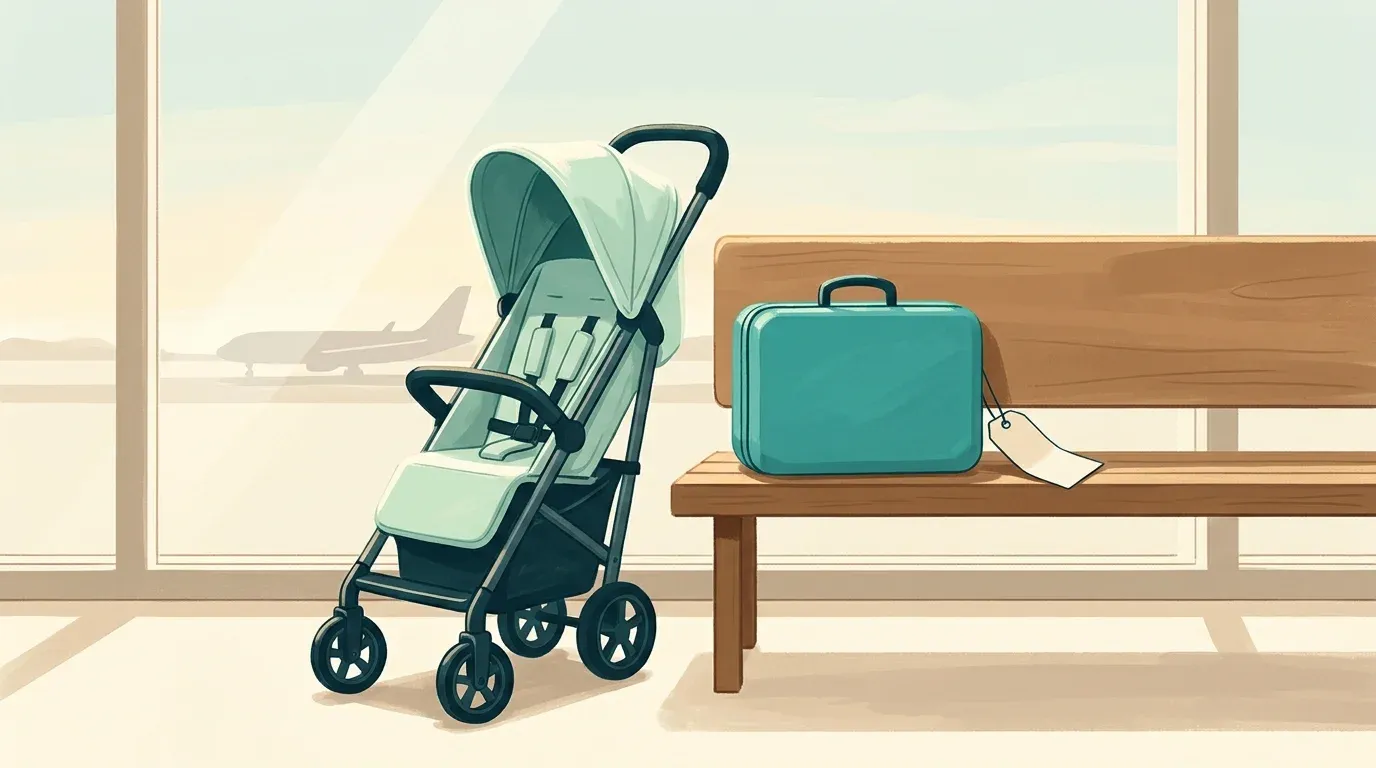
If your checked stroller comes back with visible damage, report it to the airline before you leave the airport. Keep the tag and ask for a copy of the report or a reference number. You can organize the full set of photos and records after you’ve started the report.
This checklist focuses on reporting damage after arrival on a U.S. domestic trip. For handover and pickup planning before you fly, see our airport stroller handover guide.
Capture what you can at pickup
The U.S. Department of Transportation’s baggage guidance advises travelers to report baggage damage before leaving the airport and have the airline create a report. Keep the claim tag with your travel records. If you can take photos without holding up the report, aim for three useful views:
- The whole item. Include the stroller and any outer bag or wrapping, if present, so the airline can place the close-up in context.
- The affected area. Photograph what you can see as collected. A short description such as “left rear wheel separated at pickup” is easier to follow than a guess about what happened in transit.
- The tag. Take a legible photo of the baggage tag and keep the original. Store tag photos privately, since they can contain travel details.
If you have a before-travel photo, save it separately. Label the images with when and where they were taken so you can distinguish the pickup photos from anything you notice later.
Make the report and ask about the follow-up
At the baggage service desk, or through the airline’s reporting channel if the desk is closed, give the flight number, arrival airport, tag number, pickup location and the damage you observed. Ask which channel to use for follow-up, what documents it needs and when they are due. Save the report confirmation with your photos.
The first report and follow-up paperwork can have separate deadlines. As an example, American Airlines’ conditions of carriage say to report damaged baggage before leaving the airport or within six hours of receiving it. The same terms list separate deadlines for requesting repair or submitting a compensation questionnaire. Check the terms for your own itinerary, especially if the trip includes an international leg.
Keep the airline report and the equipment question separate
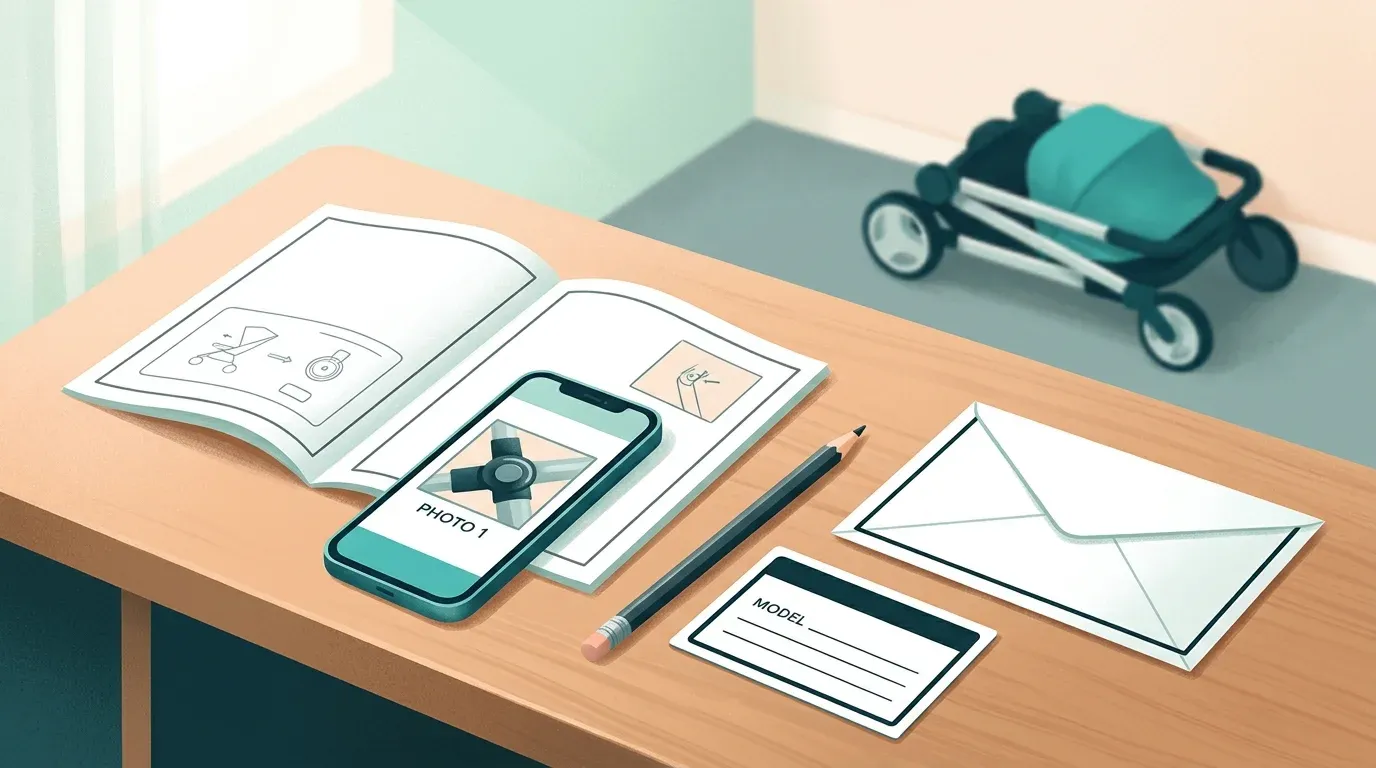
The airline can tell you what evidence it needs to process the report. For questions about the condition of the stroller, use the manufacturer’s instructions and contact the manufacturer with your photos and model details. Our manufacturer parts enquiry guide has a checklist for putting that information together.
Before arranging a repair or disposing of damaged packaging, ask the airline whether it needs to inspect either. Keep the reply with the report number. If you need to follow up, DOT’s current complaints guidance explains how to find the airline’s complaint channel. For a written complaint to DOT, it asks for booking and flight details, a description of the problem and supporting documents.
Our suggestion is to keep a short case record alongside the photos:
| Record | What to save |
|---|---|
| First report | Confirmation, reference number and submission time |
| Follow-up deadline | The airline’s exact instruction and where it came from |
| Inspection request | Whether the airline needs to see the stroller or packaging |
| Next contact | Contact channel and the next action agreed |
If you speak to someone by phone, note the date, the name they gave you and the next step they described. That gives you one record to refer to if the case moves from the airport desk to a central claims team.
How we prepared this guide
This research-based guide draws on the U.S. Department of Transportation’s baggage guidance and one airline’s conditions of carriage to distinguish the initial report from later paperwork. The photo checklist and case-record table are editorial suggestions. We have not tested equipment or filed a claim for this guide.