A baby monitor packed for your destination can become a last-minute problem when a carry-on is sent to the hold. Before the trip, identify the batteries in each part of the kit and decide what must stay with you in the cabin. A rechargeable handheld, a plug-in camera and a spare battery are different packing entries.
This is a US flight-packing guide. Check your operating airlines and the rules for every part of an international itinerary. It does not approve a particular device or explain how to use a monitor on an aircraft.
List the components before choosing a bag
Our suggested first step is an inventory: handheld screen, camera, power adapters, spare batteries and any portable charger. Read the equipment labels and manufacturer documentation to identify the battery type and rating in each component. Do not assume the camera uses the same battery as the screen, or that every component contains one.
Record unclear information as a question for the manufacturer. Do not dismantle sealed equipment to investigate. This inventory sits beside the broader baby travel packing checklist; it is not a reason to buy extra equipment.
Separate installed lithium batteries from spares
The FAA’s portable-device guidance recommends carrying devices containing lithium batteries in cabin baggage. If an eligible device goes in checked baggage, it must be completely switched off and protected against damage and accidental activation. A sleeping screen is not the same as fully powered off.
A loose replacement battery is a separate case. Under the FAA’s lithium-battery guidance, spare lithium batteries and power banks belong in carry-on baggage only. Protect spares from damage and prevent exposed terminals from contacting metal. Follow the agency’s packing guidance and the manufacturer’s instructions; do not drop loose batteries among keys or coins.
This distinction does not mean every battery type has identical restrictions. Identify the actual chemistry before applying a lithium-battery rule.
Check the rating and the operating airline
The FAA’s passenger battery reference gives 100 watt-hours (Wh) as the usual lithium-ion limit. Larger batteries in its 101–160 Wh category require airline approval; those above 160 Wh are forbidden on passenger aircraft. Additional quantity limits apply to larger spares. Do not treat those categories as permission for an unidentified battery or device.
Check the marked Wh rating and send the manufacturer any unresolved identification question. Ask the airline about its specific limits, including power-bank numbers and capacity. FAA guidance warns that airline and international rules can be more restrictive. If the answer is unclear, settle it before packing rather than estimating at the gate.
Make a pouch you can remove at the gate
The FAA’s baggage summary says power banks and spare lithium batteries must be removed when a cabin bag is checked at the gate or planeside. They stay with the passenger in the cabin and should remain accessible.
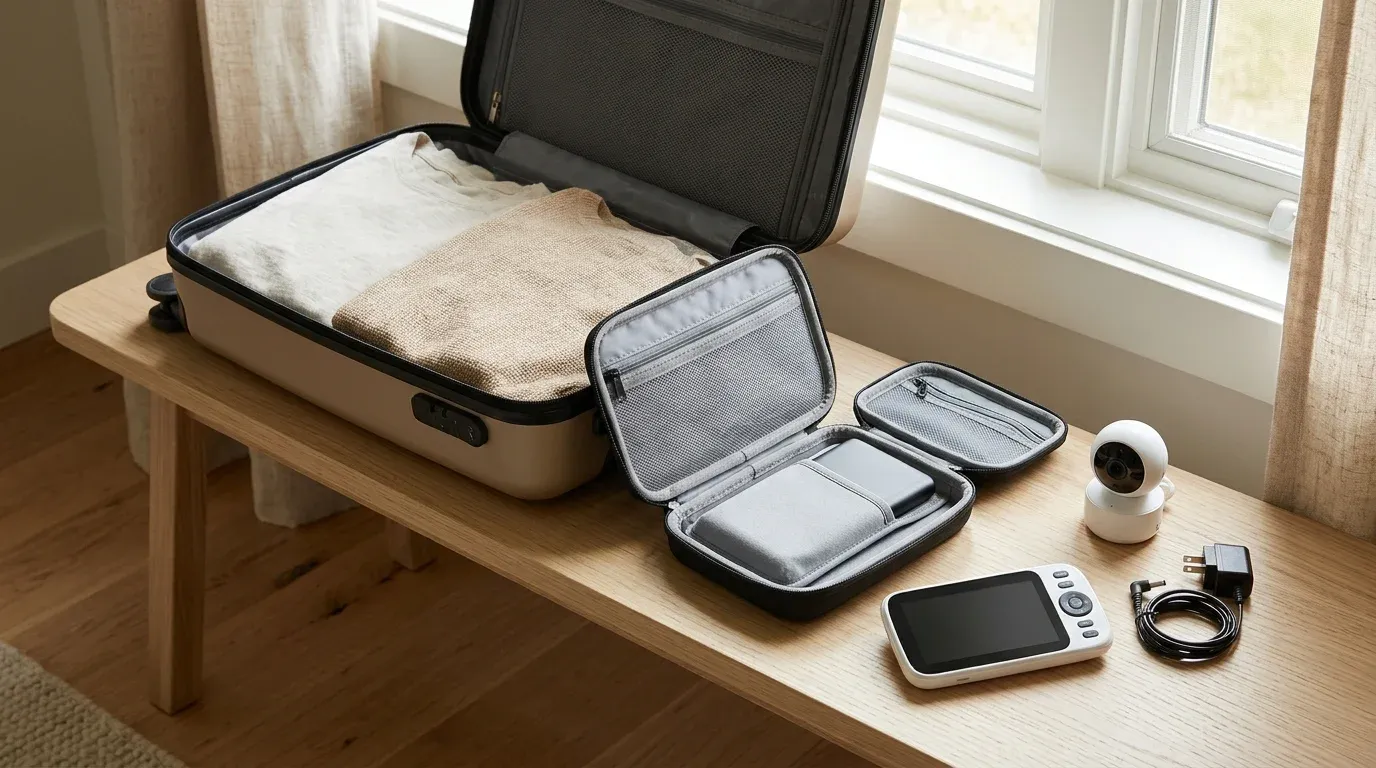
Our practical suggestion is a removable pouch inside the family carry-on, with each spare protected separately. Before handing over that bag, use this short checklist:
- Remove the power bank and spare lithium batteries; keep them accessible with you.
- Recheck any installed-battery device left in the bag against its applicable rules.
- Tell the other adult which bag now holds the pouch.
Keep this handover distinct from the stroller handover at the airport. A bag accepted at check-in may still need a different packing arrangement if it later goes into the hold.
Leave unresolved battery problems for support
Do not assume a protective pouch clears a damaged or recalled battery for travel. The FAA’s baggage summary says damaged, defective or recalled lithium batteries and recalled devices containing them must not be carried. Ask the manufacturer and airline about an uncertain item before the trip; this guide offers no repair or removal workaround.
If a battery or device overheats, expands, smokes or burns on board, FAA guidance says to notify the flight crew immediately. Packing permission also does not establish permission to charge or operate equipment during flight: follow the airline’s instructions.
At your destination, use the equipment’s own instructions and our monitor setup checklist to plan its separate setup.
How we prepared this guide
This is a research-based guide by the Fresh Baby Gear Team using four official FAA resources opened November 28, 2026. We have not tested batteries, packed equipment for this article or obtained airline approval for a device. The component inventory, removable-pouch plan and family handover checklist are our own organizational suggestions. There are no individual product recommendations or shopping offers.