A registry works best when it’s built around what you’ll use first. This checklist sorts baby gear by when you’ll need it, then marks each item need, nice to have or skip, with the safety reasons behind the skips. Where we’ve researched a category in depth, there’s one pick from that guide, shown with the product buttons on this page.
How we made it: this is a research-based guide. Safety calls come from CPSC, NIH, CDC and federal rule text; picks come from our category guides, which use manufacturer specs and manuals. We re-checked every pick against CPSC recalls (plus NHTSA for the car seat and FDA for feeding items) on October 17, 2026. We have not tested these products hands-on.
If you’re still deciding what you need at all, start with our before baby arrives gear checklist, which helps you work out space, transport and budget first.
The short version
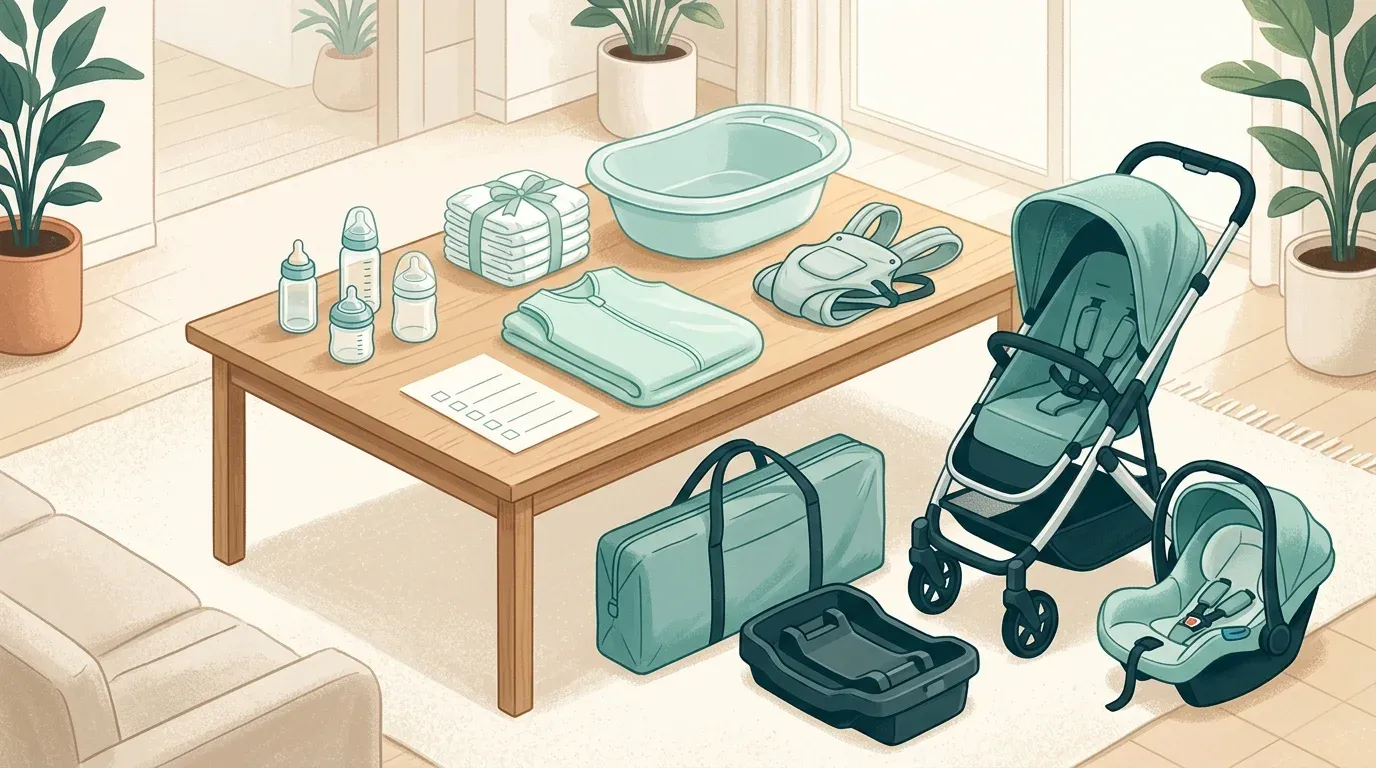
| When | Need | Nice to have | Skip |
|---|---|---|---|
| Before birth | Car seat, a safe sleep space, fitted sheets, sleep sacks or swaddles, diapers and wipes | Stroller, play yard with bassinet | Crib bumpers, inclined sleepers, sleep positioners |
| First weeks | Bathtub, burp cloths, bottles if you’ll bottle-feed or pump | Carrier, monitor, bottle sterilizer, milk storage bags | Weighted sleep sacks or swaddles, loose blankets |
| 3–6 months | Bigger sleep sacks, crib if the bassinet is outgrown | Activity mat for awake time | Add-on play yard mattresses |
| 6 months and later | High chair | Travel crib, toddler cups and plates | Gear you can’t identify or check for recalls |
“Need” means most families use it from that stage, not that you must buy everything new. Borrowed items count, as long as you can identify the model and check it for recalls.
Before birth: have these ready before you go home
Car seat (need)
If your baby will ride in a car, the car seat is the one item to have installed before the due date. Your choice is an infant-only seat, which clicks out as a carrier and often into a stroller, or a convertible seat, which stays in the car and lasts years longer. Our pick, the Britax Poplar, is a convertible rated rear-facing from 5 lb, so you register for one seat instead of two. Our guide on how long to keep a child rear-facing explains why the rear-facing limits matter.
Federal rules require every car seat to come with a registration card, and the label tells you to register it so you can be reached in a recall. Fill it in as soon as the seat arrives.
Full guide: best convertible car seats.
A safe sleep space (need)
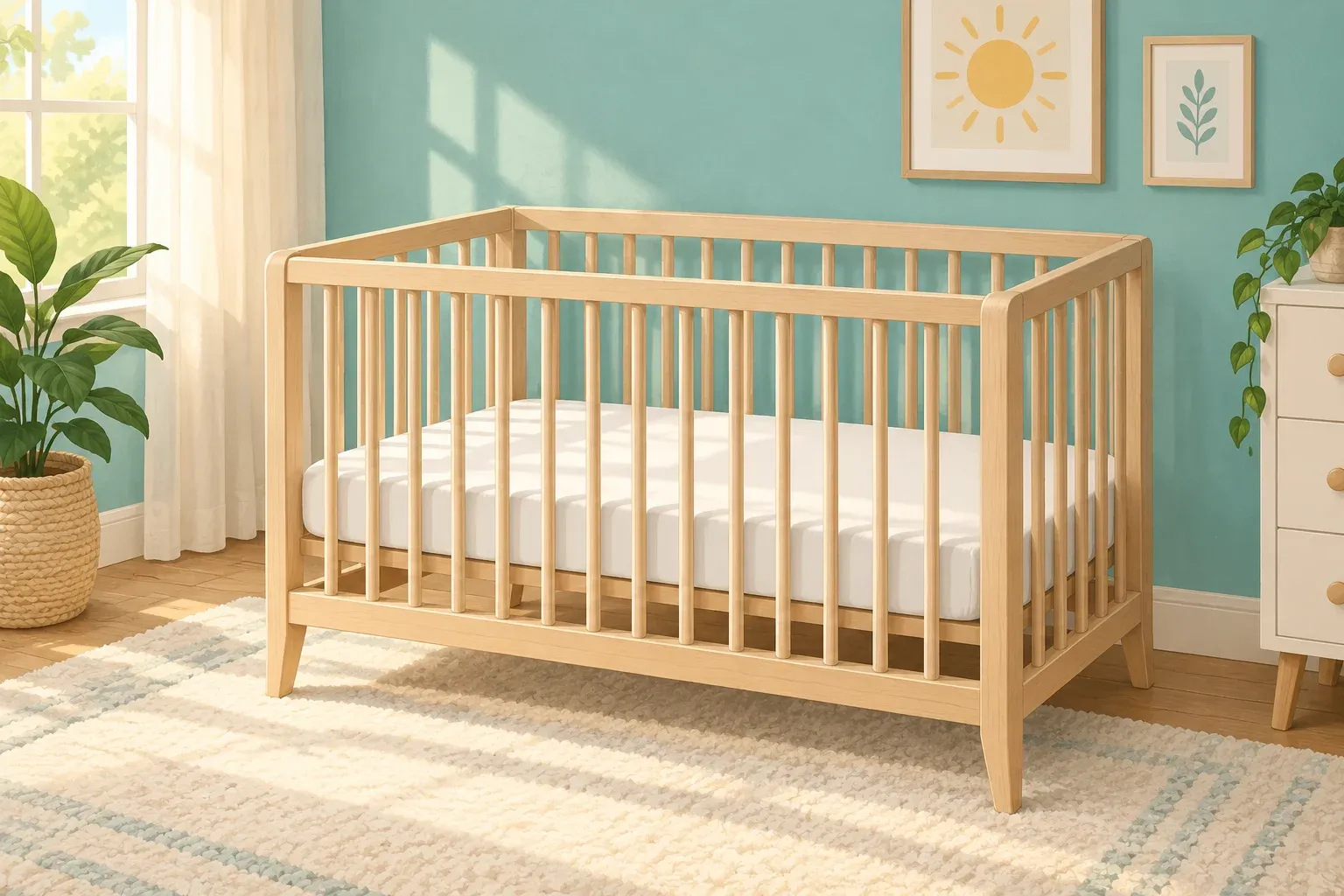
Register for one safe sleep space to start: a crib, a bassinet or a play yard that meets federal standards. CPSC’s advice is a crib, bassinet, play yard or bedside sleeper with nothing in it but a fitted sheet, and your baby always on their back. NIH’s Safe to Sleep campaign adds that the surface should be firm, flat and level, and recommends room-sharing in a separate infant sleep space. Our pick is the Graco Pack ’n Play On the Go, whose bassinet gives you a raised newborn spot next to your bed and a play yard later.
Not sure which to choose? See crib vs bassinet vs play yard and our safe sleep guide. Full guide: best pack and plays.
Fitted sheets (need, and more than one)
Register for two or three fitted sheets made for your exact crib, bassinet or play yard. Sheets get changed often in the early weeks, and a spare in the drawer saves a late-night laundry run.
Sleep sacks or swaddles (need)
A wearable blanket replaces loose blankets. Register for two in each size so one can be in the wash, and add the next size up. Our pick is HALO’s cotton SleepSack, which is arms-free and unweighted. Full guide: best sleep sacks.
Diapers and wipes (need)
These are the easiest things for guests to buy and the ones you’ll go through fastest. Ask for several sizes, not just newborn, so nothing goes to waste if your baby is born bigger or grows quickly. Keep the boxes sealed until you need them, so unused ones are easier to exchange. For nights later on, see our overnight diaper guide.
Stroller (nice to have from day one)
Many families use a carrier for the first weeks and the stroller later, so this is a “nice to have” for the ride home but a near-certain buy within a few months. If your car seat doesn’t click into a stroller, choose one rated from birth with a flat recline. Our pick, the UPPAbaby Minu V3, is rated from birth for that reason, and it’s compact enough for travel. Full guide: best strollers, or work through how to choose a stroller.
First weeks
Bathtub (need)
An infant bathtub with a newborn sling or support makes the first baths easier. Whatever you use, NIH’s MedlinePlus says never to leave your child alone around water, not even for a few seconds. Our pick is the Skip Hop MOBY Smart Sling 3-Stage Tub. Full guide: best baby bathtubs.
Bottles, a sterilizer and milk storage (depends on how you’ll feed)
- Bottles are a need if you’ll formula-feed or pump, and nice to have otherwise.
- A bottle sterilizer is nice to have. CDC advises sanitizing feeding items at least daily for babies under 2 months, born prematurely or with a weakened immune system, and says a dishwasher with hot water and a heated drying cycle or sanitize setting does the job without a separate step. Our pick, the Philips Avent microwave sterilizer, is a low-cost option if you don’t have that dishwasher. Full guide: best bottle sterilizers.
- Breast milk storage bags are a need only if you’ll pump. They’re a good consumable to list in multiples; our pick is Lansinoh’s 6 oz bag. Full guide: best breast milk storage bags.
- A breast pump: before registering for one, check your health plan. HealthCare.gov says health plans must cover a breast pump, either a rental or one you keep, though plans set their own rules on type and timing.
Carrier (nice to have)
A carrier keeps your hands free for the many hours a newborn wants to be held. Our pick, the Ergobaby Omni Classic, covers newborns from 7 lb without an insert and lasts to 45 lb. Full guide: best baby carriers.
Baby monitor (nice to have)
If your baby sleeps in your room at first, you may not need a monitor for months. If the nursery is out of earshot, our pick is the VTech VM819, a low-cost video monitor with no Wi-Fi. Full guide: best video baby monitors. Before setting one up, read our baby monitor setup checklist for where to put the camera and cord.
3 to 6 months
- The next sleep sack size (need): add it to the registry now, so it’s ready when the first one gets snug.
- A crib (need, if you started with a bassinet): bassinets and play yard bassinets have weight and milestone limits, such as 15 lb or pushing up on hands and knees on our play yard pick. Check the label of yours.
- An activity mat (nice to have) for supervised awake time on the floor.
6 months and later
- High chair (need once your baby sits unaided). Our pick, the Ingenuity Trio Elite, is for babies from 6 months who can sit unaided and later converts to a booster and toddler chair. Full guide: best high chairs.
- Travel gear (nice to have): if you’ll travel, our baby travel gear checklist helps you decide what to bring and what your destination can supply.
What to skip, and why
These aren’t just “save your money” calls. Each one is on the list for a safety reason.
| Skip | Why |
|---|---|
| Crib bumpers | Banned. The Safe Sleep for Babies Act made padded crib bumpers banned hazardous products from November 12, 2022, regardless of when they were made. |
| Inclined sleepers and nappers | Also banned under the same law. CPSC says inclined products with an angle greater than 10 degrees should never be used for infant sleep. |
| Sleep positioners, wedges, pillows and loose blankets | NIH’s Safe to Sleep campaign lists soft items, positioners and blankets among the things that can pose dangers in the sleep area. A fitted sheet is all a crib needs. |
| Weighted sleep sacks, swaddles and blankets | CPSC advises against weighted blankets or swaddles for babies, and a CPSC commissioner’s 2024 statement notes that the AAP calls weighted sleep sacks not safe for infants. |
| Add-on play yard mattresses | CPSC has recalled and warned against several aftermarket play yard mattresses that may not fit, warning that babies can suffocate in gaps between an undersized mattress or extra padding and the play yard walls. Use the mattress that came with the play yard. |
| Infant bath seats and bath rings | A seat is no substitute for an adult’s hands, and in 2026 CPSC warned consumers to stop using several bath seats that violate the federal standard because of drowning and entrapment risks. Our guide to bathing a baby safely explains why we skip them. |
| Anything you can’t identify | A hand-me-down without a model label or instructions can’t be checked for recalls. Our recall guide explains what to look for. |
A few skips are simply our opinion: lots of newborn-size clothes (babies outgrow them fast), wipe warmers, and decorative crib bedding, which you can’t use in the crib anyway.
Registry tips
- Register for consumables in several sizes. Diapers, wipes and milk storage bags are easy for guests to buy and you’ll use all of them.
- Add a few big-ticket items early. Guests who want to go in together on the car seat, stroller or play yard need time to organize it. Some registries let several people contribute to one item; check whether yours does.
- Keep receipts and registration cards. CPSC requires durable infant and toddler products to come with a registration card attached, so the maker can reach you in a recall. Mail it or register online, then file the model number with our baby gear record sheet and check items with our recall guide.
- Check the return window. Gifts often arrive months before you’d open them, so find out how long you have to return or exchange items on the registry you use.
- Pick a registry that suits your guests. Amazon, Target and Babylist all offer baby registries; the right one is whichever your family and friends find easiest to shop. If you choose Amazon, you can start an Amazon Baby Registry here and add the picks above from their product links.
Frequently asked questions
How many items should be on a baby registry?
There’s no right number. Cover the “need” items for your first weeks, then add a mix of consumables at every price and a few bigger items for group gifts. More items give guests choices; a shorter list is easier to keep track of. Check it against the jobs in our before baby arrives checklist.
When should I start a baby registry?
Early enough that gifts arrive before your due date, with time to install the car seat, assemble the sleep space and register both for recalls. If you’re having a shower, get the registry ready before invitations go out.
What should I not put on a baby registry?
Leave off crib bumpers and inclined sleepers (both banned), sleep positioners, weighted sleep sacks or swaddles, loose blankets and pillows for the crib, and add-on play yard mattresses. The skip table above gives the reason for each.
Do you need two of anything?
Yes, for a few things: fitted sheets and sleep sacks (so one can be in the wash), and car seats or car seat bases if your baby will ride regularly in two cars. Everything else, start with one and add more only if you find you need it.
More planning help is in our pregnancy hub.